Thai Square

DSC_4133.jpgWith a plethora of Thai restaurants dotting nearly every corner of the DMV area, and the number of blogs that I have written about this type of eateries, why another one on this cuisine? Simple: because this establishment has been on my radar for some time since my first visit many moons ago, and the reputation that precedes it. Thai Square is a small joint with only around 10 tables, located in Arlington, VA on a strip filled with other restaurants that I have written about (See Maruko and Bangkok 54). Many a times, there was a small waiting line when we arrived there, which has been a slight deterrence from visiting it more often. But we keep going back to it, taking our chances, to savor some of the dishes that make this place stand out among others.
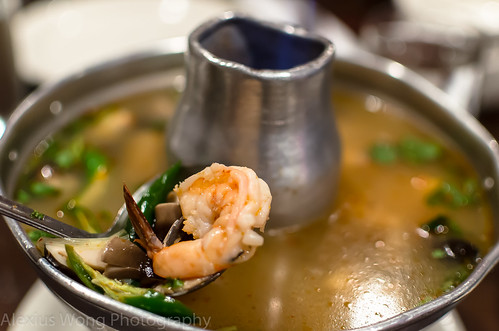
Tom Yum Goong

One of my favorite openers to a Thai meal is Tom Yum Goong, or Spicy Sour Shrimp Soup. This establishment serves this classic sip in a unique way. It comes in a metal pot that has a flame shooting through the middle in the opening. The Tom Yum style here is not quite like the other versions that I have savored – the broth is quite clear and devoid of the normal aromatics of lemongrass, galangal root, and Kaffir lime leaves: a Thai-Chinese style. It is rather flavorful even without the usual aromatics, quite sour from a good squeeze of lime juice, and rather piquant from the slivers of fresh green chilies that provide both spice heat and a slight vegetal fragrant note. The customary straw mushrooms adds the contrasting flavor and texture to the soup along with the pieces of mild sweet shrimp. It takes some time to adjust to this style of this soup but it is worth the order. Just make sure to order it quite spicy since not-too-spicy was a bit too tame for my taste buds. This offering is one of the many traditional hot and cold appetizers that this eatery seems to handle well despite its small kitchen.
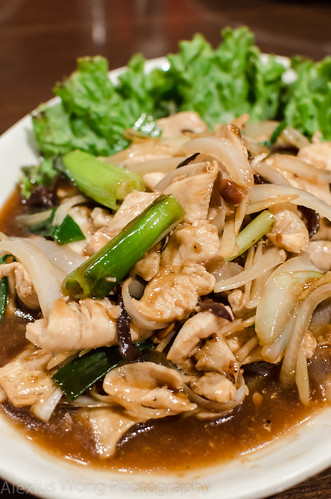
Chicken Ginger in Bean SauceKai Pad Khing Sod is another favorite of ours. It is chicken cooked with wood fungus, ginger slices, and green onions in an oyster and bean paste sauce. The pieces of chicken are tender, the wood fungus a bit crunchy, green onions still firm but not raw, and the slices of ginger provide the bite that lifts the dish. In addition, the gravy made from both sauces is sufficiently flavorful yet complex at the same time. Brown bits of soybeans add a slight fermented salty element to the dish that adds interest to this simple dish. This is definitely a favorite of one of my dinner mates who cannot get enough of the ginger flavor that this dish packs.

.

.

.

.
.
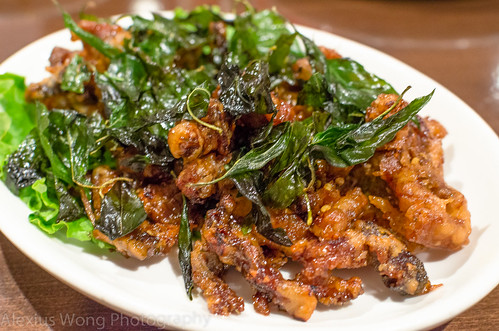
Crispy Honey Duck with Basil

Here is a dish that we cannot resist: Crispy Honey Roasted Duck with Basil. Pieces of roasted duck have been battered and deep-fried, then cooked with pieces of dried chili, and flavored with honey. The pieces are crispy from the frying, sweet from the honey, piquant from the dried chilies, and slightly fragrant from the crispy leaves of deep-fried basil. Although we try to stay away from deep-fried dishes in most restaurants, there seems to be some kind of holy gastronomic dispensation that permits us to continuously order this dish on every visit – it is that good! This is a must order since I have not come across any other restaurant serving this delectable dish. A healthier squid version is equally highly recommended.
Yellow Curry

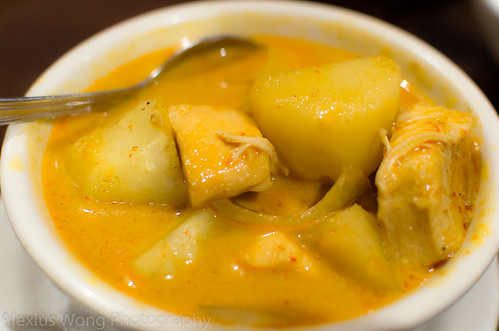
A curry dish is a must order at any Thai establishment. Since one of my dinner mates has a low tolerance for spice heat, we chose to order the Yellow Curry. It arrived in a bowl brimming with pieces of chicken breast accompanied by large pieces of potato and slivers of sweet onion. The bird meat was still moist and the tuber well cooked and permeated with the sauce flavors. Despite lacking some chili heat, the curry sauce was quite fragrant from the aromatics and spices while the coconut milk added the necessary smooth richness that tied the elements together. The other curry offerings come in the red, green, country, and Panang versions. It also serves the Roasted Duck in Red Curry Sauce that carries pieces of pineapple and basil leaves along with the aforementioned meat – I recall its spiciness along with the strong flavors of the ingredients that do a good job balancing each other out – quite a spicy treat.

Lump Crab Meat Fried Rice

Another must-order here is the Lump Crab Meat Fried Rice. It is rice fried a la Thai with pieces of egg, green onions, sweet onions, carrots, and the star item, jumbo lump crab meat. The rice is flavored with a combination of soy sauce and the slightly seafood-tinged fish sauce that adds an amazing savoriness to this plain grain. The large pieces of crab meat are fresh, adding a moist and sweet flavor to this dish. With some good wok-searing, this dish arrives filled with a complex level of flavors that belies the ingredients’ simplicity. Normally not a huge fan of fried rice dishes, I find this version truly delicious and completely irresistible.

Another seafood dish that I have ordered in the past is Sukiyaki. Yes, it is a Japanese dish but it has been adapted to the Thai palate. The dish consists of pieces of shrimp, scallop, squid, chicken that have been stir-fried with bean thread noodles, Napa cabbage, celery and scallions, served with a slightly sweet and spicy sauce. This dish tastes far from the Japanese version with its level of savoriness that spells clearly Thai. Furthermore, the sauce adds the sweet and spicy notes to the dish. Yes, sweetness is an important and integral flavor element in Thai cuisine.
Mango and Sticky Rice

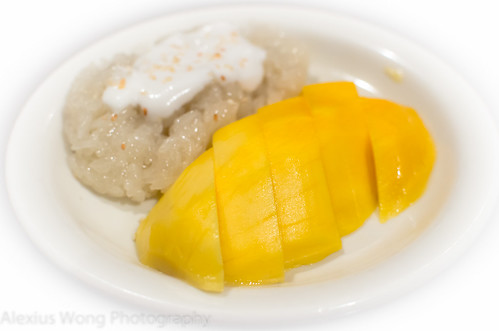
For dessert, we elected for the true and tested that would hardly disappoint the diner – Mango and Sticky Rice. Since it was the middle of summer, it was the perfect order for the pieces of mango were ripe and sweet. Such fruitiness was paired up and complemented by the rich coconut-laced steamed sticky rice that was further enriched by more salty coconut cream, punctuated by pieces of fragrant sesame seeds. How can you go wrong with this classic Thai combination? On other visits to this locale, we have ordered a sweet stew of Taro root, Yam, and Tapioca Pearls, coated by a coconut cream sauce and sweetened by palm sugar. These dessert dishes are not listed on the menu since they must be seasonal and offered occasionally. Make sure to leave some room for these sweet treats at the end of the meal.

Thai Square is a quaint little eatery that attracts as many Thai customers as the farang, non-Thai. In the many years that I have visited it, I have hardly walked away disappointed but always glad that I took the chance on a quiet night or was patient enough to brave the lines and wait for one of the few tables to clear up. No matter the circumstance, I have always left with a sated stomach and wide smile, vowing to return in the near future. With the really modest prices and wonderfully authentic skilful cooking, there are no excuses not to make the journey, wait in line, and fill the senses with satisfying Thai flavors found in the long listed menu. You’ll know what I mean when you make it there one day.

Thai Boat Market Beef Noodle SoupAddendum: Upon the recommendation of my Thai doctor, I stopped by Thai Square to sample a lunch dish that is not served anywhere else which carries quite a reputation among the cognoscenti – Boat Market Beef Noodle Soup. The large bowl arrived with a mound of rice noodles inundated in a dark rich fragrant beef broth scented with some cinnamon and star anise. The large beef balls were floating like buoys, alongside bits of tender beef, all made fragrant by some fried garlic and fresh cilantro and green onions. Bits of pork crackling added to the lusciousness of this dish. Digging into it, I was transported to the boat markets of Thailand imagining this bowl handed to me by a cook from her floating vessel. It was the perfect noodle soup dish on a cold wet day. My doctor was delighted to receive a take-out order from me during my visit after. This is a must-order during the lunch hours.

Thai Square on Urbanspoon

Malaysian Drinks, Fruits, and Desserts

Al Fresco at Coffee ShopLiving in an environment where mornings start with 2 hours of soft diffused light and the skin is constantly moisturized from the high humidity and warm temperature, there are some downsides to these pleasant living conditions of tropical Malaysia.  Furthermore, the local penchant for rich and spicy dishes does tend to overwork the body system as I experienced this after a few days of indulging in the wonderful irresistible dishes that attack the visitor from all angles.  To overcome this “heatiness” that most face as the result of the above, many Malaysians resort to drinks and fruits to cool the system down.  With the abundance of fruits everywhere and the amazing variety grown in this tropical climate, one looks forward to the different offerings depending on the growing season.  Fruits also act as the perfect end to a meal, as well as some sweet concoction.  Here are the common Malaysian drinks, fruits, and desserts:
.
.

DSC_0016.jpg

1) Leong Soi – This hideous witches-brew-looking drink was my first request when I went to visit my auntie during my trip.  My grandmother used to boil this drink consisting of various dried leaves and stems that produce a slightly bitter dark herbal drink that I would sip often when it was too hot or when my system was overtaxed by the rich food.  Grandma was well-versed in Chinese herbal medicine since she had to rely on such cures during times when visiting doctors were financially unfeasible during the meager war years.  I am glad my auntie boiled this large pot since I must have consumed most of this in just a mere two days!  I did indeed feel much better after.

DSC_0361.jpg2) Yeen Mai Soi/Barley Drink – Another favorite of mine is this drink made by boiling whole barley pearls until most of the starch has leached into the liquid, leaving a slightly thick drink.  Sugar is added to sweeten it and lime juice to lighten it.  Served with ice, it is the perfect order when visiting a coffeeshop as in this case, the reputable Lai Fong Coffeeshop near Petaling Street, Kuala Lumpur.  It may appear quite heavy due to the starch but amazingly it does a wonderful job cooling the system especially when served with lots of ice.

.

.

.

.

.

.

DSC_0226.jpg3) Leong Fun/Grass Jelly Drink – This dark drink is another coffeeshop favorite that consists of a jelly made from Grass Jelly and mixed with a slightly sweetened iced water.  The jelly is made by boiling slightly oxidized stems and leaves of a plant, member of the mint family, along with a coagulant, and then allowed to cool into a jelly form.  It is slightly bitter and herbal which is balanced by the sugary water.  It can be found in most coffeeshops and it is another must order when dealing with the tropical heat.

.

.

.

.

.

.

DSC_0108.jpg4) Sheen Kam Soi/Lime Drink – This rather potent drink is made with lots of lime juice as well as Vitamin C.  It is made with the local Kalamansi lime which is small yet packs a punch in its juices but not too sour as Key limes, the one used to make Key lime pies.  It has a slight bitterness from its tough skin that balances the tart flavors.  To enhance the flavors, a dried salted plum is added as the piece de resistance and the ultimate sour and salty treat in this drink.

Sydney 052.jpg

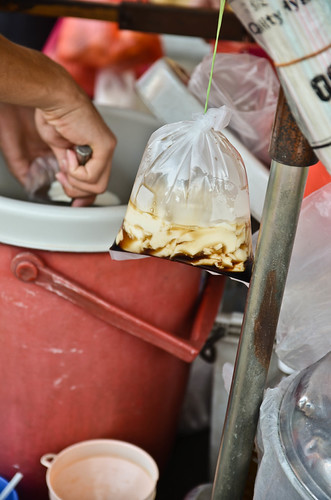
5) Teh Tarik/Pulled Tea – This drink hails from the South Indian community that used to be served at Roti Canai stalls (see blog) along with its food offering.  It is basically strong local tea (my favorite) that has been mixed with sweet condensed milk and “pulled” until it is frothy and slightly cool enough to be sipped – the tea version of cappuccino.  It is an incredible sight to watch someone pouring the steamy tea into another container while “pulling” the tea by lifting the containers away from each other, without spilling a single drop.  Just like its coffee counterpart, the top foam makes this drink stand out from its flat version. This is usually drunk at anytime, including late in the night at the night markets.

DSC_9930.jpg6) Duku Langsat – the flesh is sweet and fleshy with a bitter tiny seed in the middle, making it a challenge to eat the fruit without biting it.  But the sweet flesh makes it worthwhile and all attempts are usually made to avoid the center.  The outer skin is quite distinct by its leathery quality that peels easily to reveal the semi-translucent flesh.
.
.
.
.
.
.

.

.

.

.

.

DSC_0009.jpg

7) Chiku – This fruit is also known as Sapote in the Spanish-speaking world.  The sweet flesh is very soft but a bit rough in texture.  Like most fruits in this part of the world, it is seasonal and thus available only at a certain time of the year.  I was glad that it was available when I made my visit back recently.

DSC_0146.jpg8) Chempedak – this fruit is related to the Jackfruit and Breadfruit, but it grows only in the Southeast Asian region.  The flesh is a rich and sweet soft flesh, much like the texture of a ripe mango, but much sweeter and strong heady notes to accompany it.  The seeds are usually saved and boiled, tasting much like a richer water chestnut.  As a child, I would eat this fruit that has been battered and deep-fried, which made the seeds edible when well-cooked.  It is definitely missed due to its unavailability outside Southeast Asia.
.
.
.
.
.
.

DSC_9965.jpg

9) Starfruit – most homes in this tropical country would grow this fruit tree since they do well without much care.  When in season, the tree bears many fruits that need to be wrapped in paper to prevent the birds from ingesting them, as was in the case at my auntie’s home.  the skin is a a thin skin that protects a juicy insides, much like a soft apple.  However, it is slightly tart and sweet at the same time, providing a light crunch in each bite.  Strangely, Malaysians love to eat it by dipping it into a pool of salt.

DSC_0151.jpg10) Papaya – another commonly grown fruit tree in most homes is the papaya.  Like the starfruit, it is commonly vulnerable to birds that sense when the fruits are ripe and sweet, thus the common practice of wrapping them in paper as they ripen.  I really enjoy this soft and sweet fruit that exude a unique fructose flavor that is unmatchable.  It is one of my favorite breakfast fruits that is paired with a squeeze of lime.

.

.

.

.

.

.

.

DSC_0067.jpg

11) Mata Kuching – A long time favorite of mine.  It is a slightly leathery flesh that is very sweet, coating a hard black seed.  It bears the name of “cat’s eye” due to its similar appearance.  This fruit is very sweet and makes it completely irresistible, making heavy consumption of it possible.  However, the common warning is that consuming too much can over-tax the system.

DSC_0285.jpg12) Dragon Fruit – this fruit was not common more than 10 years ago.  This fruit is indigenous to Vietnam and it made its way to this part of the world.  It bears such name due to the leaves that emanate from the body of the fruit, looking like dragon scales.  But inside bears a richly colored fruit that is soft and sweet.  It has become a well sought-after fruit by the locals due to its wonderful flavor and exotic looks.

DSC_9998.jpg

13) Durian – I saved the King of Southeast Asian Fruits for last among the fruits.  How can I explain its flavor?  It is unique and extremely strong, yet illusive at the same time.  Some have described it as rotting garbage which does not make it exactly attractive to the novice.  But once you can get pass its strong odors, you will taste a flavor that is rich, custard-like, very heady, complex, slightly fermented, sweet, and mineral-like.  It is this mix of flavors that make it totally irresistible to many, much like an addict looking for a fix.  I have watched many locals sitting at stalls indulging in these fruits with glazed eyes – and I know why.

DSC_0047.jpg14) Tau Foo Fah –  One of my pleasures of going back to my childhood home is going to the morning market like I used to do so with my grandmother and later with my mother.  It was always a delight to see fresh ingredients among the array of spices and dry goods.  Among them are prepared foods that are readily available for consumption, including this Tofu dish which I came across a vendor selling this item.  Although it is a sweet dish, it is usually eaten as a snack or at any time of the day.  It is fresh soft silken tofu that is paired up with palm sugar spiked with fresh ginger.  This is indeed a healthy snack and has a cooling effect on the body even when consumed hot, as it is customarily done so.

.

.

.

.

DSC_0632.jpg15) Kueh Lapis – While visiting my parents in Melbourne, Australia, we stumbled across these Nyonya cakes in a local Asian grocery store that caters to the local Malaysian community.  They are made of layers of rice flour dough that has been enriched with coconut milk, each layer steamed separately thus its name meaning “layer cake”.  Each layer is contrasted with a different colored layer to create such effect.  Eating this delight reminded me of my grandmother who was a master Nyonya cake maker, and I was glad to be the recipient of her wonderful gift.  They are usually eaten for afternoon tea rather than dessert after a meal.

.

.

.

.

DSC_0657.jpg16) Ais Batu Campur (ABC) – This dessert/snack is a definite favorite among nearly all Malaysians.  It is basically shaved ice that is sitting on top of a melange of cooked red beans, cooked fresh corn kernels, different forms of jelly, and nuts.  The shaved ice is usually flavored with a sugar syrup, rose petal syrup and evaporated milk.  As a child, this was a frequent order during my school recess time as a way to cool down from the heat and the non air-conditioned classrooms.  I had this rendition with my parents and their friends in a Malaysian restaurant in Melbourne, even in the midst of their winter season.  I guess, for some, habits are hard to die as we were digging into it with gusto even after a big meal, much like little kids at the school canteen, albeit in cold weather.

This ends the series of Malaysian food, from Noodles and Rice Dishes; Breakfast, Lunch, and Dinner 1; and Breakfast, Lunch and Dinner 2.  I hope the series has shown you the essence of this Southeas Asian cuisine, the variety of dishes, and that it has inspired the reader to look out for the dishes that I have described, even though some dishes seem a bit off-putting by the descriptions, like the Durian fruit or the Buah Keluak.  But one has to take the leap and take the first bite.  That may just change your mind and make you an aficionado of the rather bizarre.  If not, there are many more dishes you will fall in love with.  Selamat makan (Happy eating).

Malaysian Breakfast, Lunch and Dinner2

Chilies & Lemongrass at the Morning MarketTo continue my series on Malaysian food that I managed to “catch up on” this summer which I have been writing about in the last couple of blogs, here are the other breakfast, lunch and dinner dishes that I savored on the course of my trip to Australia and Malaysia:

Soft-boiled Egg

1) Soft-boiled Egg  – This breakfast item is an all-time favorite of mine that was nearly wiped off the face of my memory bank.  I was mildly surprised to be presented this egg dish one morning while staying at my auntie’s place.  This delicately prepared and equally delicate tasting dish speaks of pure simplicity in the ingredient: a fresh golden-yolk egg that is barely cooked.  With a couple of drops of soy sauce and a dash of white pepper, it makes the perfect “sauce” to dunk a piece of toast – the perfect morning bliss for me and for my mother who also shares her love for this.

DSC_0117.jpg

2) Roast Duck – Walking around various neighborhoods in Kuala Lumpur, Malaysia, you will notice coffee shops everywhere that cater to the culinary needs of the residents in the vicinity and even to those from other neighborhoods, depending on the reputation of the food.  One such place was this eatery that served roast meats and its renowned Roast Duck.  What made this rendition superb was the complete rendering of the fat from the skin, which made it palatable, and the light seasoning of the flesh that had hints of 5 spice powder.  The accompanying sauces augmented the various flavors and spices found in the meat itself.  It was a good thing we got there just as the shop opened just before the huge crowd it tends to attract.

DSC_0154.jpg

3) Satay – On my way to meet up with an old college buddy in Kuala Lumpur, I came across a Satay vendor who was cooking these sticks of meat the traditional way, over some coals outdoors.  Although I had a serving of this in Sydney, I was rather disappointed by its lack of charcoal char and the rather weak peanut sauce.  But passing by this sight reminded me of the real flavors of this Malay favorite among Malaysians and others.  If weren’t for dinner plans, I would have taken a seat and placed an order of this sumptuous looking sight.
DSC_0617.jpg

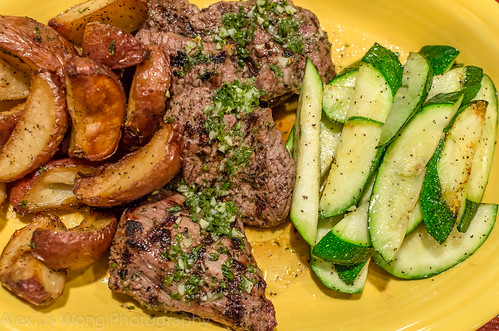
4) Butter Prawns – This is truly a Malaysian seafood classic.  Unpeeled Prawns are deep-fried until the shell is completely edible.  A topping consisting of whispy bits of egg white fried in butter (hence its name) provides a rich flavor along with its crispy texture.  Slices of chili and curry leaves add the fragrant and spice elements to this dish that takes the dish to another level.  This is a must-order from a good seafood restaurant when in Malaysia, or a Malaysian restaurant anywhere else, like what I had in Melbourne, Australia.

DSC_0623.jpg

5) Sambal Kacang Panjang/Spiced Longbeans –  Longbeans are a favorite among most Asians for its versatility and taste.  Here it is cooked the Malay way with a spice paste consisting of shallots, dried shrimp and dried chilies.  This condiment adds the spice heat and flavor elements to the rather bland vegetable that can hold up to some serious wok searing. The addition of fried dried whitebait fish (Ikan Bilis) brings a contrasting textural element to the softer vegetables as well as additional flavor to this already flavor-packed dish.  Love my veggies cooked this way.

DSC_0627.jpg

6) Char Tau Kueh –  This Hokkien breakfast item cannot be classified as a noodle or rice dish although the main starch is made from rice flour that have been mixed with water and steamed until it has firmed up.  It is then cut into square pieces and wok seared with garlic, egg, beansprouts, and dried pickled vegetables. The bits of rice cake are rather bland but the addition of soy sauce and the pickles add the necessary flavorings to this dish.  This is one of my favorite breakfast dishes my mum would buy from the local morning market, and I glad I savored it a couple of times on this trip.

Fresh Tofu SaladFresh Tofu Salad –  Malaysians have a penchant for tofu, especially in the fresh form.  Staying at my auntie’s place in Kuala Lumpur, I was presented this cold dish for dinner which was served in my parents home weekly especially on our meatless Fridays.  It is soft fresh tofu that is topped with oyster and dark soy sauces, aromatic crispy fried shallot rings and topped with some green onions, and/or coriander leaves like how I prepare it.  This is truly a refreshing vegan dish and a true study of flavor and textural contrast.

DSC_0647.jpg

8) Assam Fish – this dish was already featured in the previous blog, but I wanted to show that in Malaysia, it is common to serve the fish whole with the head and eyeballs intact.  Most Asians are suspicious of restaurants that do not serve the fish in its entirety thus this common practice.  For most Westerners, this can be rather off-putting with the huge eyeballs staring at you especially when the head is pointing towards such eater at the dinner table.

DSC_0624.jpg9) Tofu Mixed Vegetables – For most Malaysians, a meal would be incomplete if a dish made with fresh vegetables is not ordered.  One of my favorite way of having the greens cooked is with a light sauce and with some fried tofu bits.  The frying of the tofu firms up the soy cakes and provides a rougher texture on the outside.  The addition of Chinese mushroom adds a depth in flavor to the sauce and a “meaty texture” to the quickly cooked and crunchy vegetable pieces.  This is Vegan Heaven here.

DSC_0662.jpg

10) Hor Chien/Oyster Pancake – When I was visiting my parents in Melbourne, we stopped at one of the many Malaysian eateries that dot their residential area – yes, they are never lacking in this culinary department.  One of the specials for that day was a dish that I had not eaten for many years – Hor Chien.  It is basically fresh small oysters that are fried in an egg/flour batter until the outside is slightly crispy and the interior still quite soft.  The obligatory sour chili sauce provides the necessary foil to cut through the richness of this seafood pancake.  This brings back memories of eating this during my childhood at seafood restaurants when my father used to take us back to his hometown in Melaka.

Sambal Bendi/Okra/Lady's Fingers11) Sambal Bendi/Okra – Here, we have Okra, or Lady’s Finger as it is known in Malaysia, which in this case, has been cooked the same way as the above Longbean dish, with a chili spice paste that adds tremendous flavors to this mild vegetable.  The secret to cooking this dish is to wok sear it very quickly so that the high heat cooks the okra bits while maintaining a slight crunch at the end.  As a child, I would pick these “lady’s fingers” growing in the backyard for this dish.  This is definitely not the slimy version that most Americans are used to and have an aversion for.

As you can see from this blog and the previous one, Malaysian Breakfast, Lunch, and Dinner1, the food is a reflection of the bounty in a tropical climate: the abundance of seafood in its surrounding waters, the meat and poultry that are never lacking of feed around them, vegetables, herb and spices that grow without much effort that add the necessary fiery and flavorful complexity to the delicious dishes. With the influences of various culinary traditions arriving together at this intersection, the result is fresh food that is cooked in an unlimited number of ways that produce an amazing array of temptations. Resistance is just futile around this part of the world.

Malaysian Breakfast, Lunch, and Dinner1

Fresh Fish at the Morning MarketMan cannot live on Noodles and Rice Dishes alone (see last blog), at least not for most Malaysians. Malaysia sits on a geographically strategic location in which historically it has received influences from different parts of the world due to trade from all directions and also stemming from being part of various empires, notably the South Indian Cholan and the Indonesian Srijavan empires, as well as its position as a Chinese vassal state for many centuries. Blessed with humid tropical climate in which literally anything will grow just by placing it in the soil, Malaysia is abundant with vegetables, fruits and herbs/spices that are incorporated into the cooking of an equally abundance of seafood, poultry and meat. Needless to say, Malaysian food is full-flavored, unique, and rather exotic even to some fellow Malaysians themselves. Here are the different breakfast, lunch, and dinner dishes that I managed to delight in during my recent visit to this part of the world.

Roti Chanai/Indian Pastry 1) Roti Chanai – This South Indian dish is a breakfast staple not only for the Indian community but for most Malaysians. Layers of finely stretched dough have been separated by clarified butter or margarine, much like an Asian version of Puff Pastry. After spending time on the flat griddle, it is usually served with some cooked dahl lentils and a light vegetable or fish curry. This dish brings back memories of stopping by roadside shacks and having this along with some hot pulled tea. A spicy start to the morning.

Ayam Buah Keluak/Peranakan Chicken Stew2) Ayam Buah Keluak – This dish is quite exotic even for some of my relatives as it hails from the Melaka Peranakan culture that traces its roots to Chinese migration to the area beginning in the 15th century. It is a stew that pairs chicken with the Keluak seed that grows in the island of Java. The seed is toxic in the raw form, but it produces a dark chocolate-like flesh after being cooked for some time. It can also be cooked with pork ribs, which my family prefers, or a firm flesh fish. I relish eating it when I am visiting my family since I do not get it anywhere else. This is soul food for me, despite its odd sounding description.

Asam Ikan/Spicy Sour Fish Stew

3) Asam Ikan – Again, like the above, this dish has its roots in the Peranakan culture, a subculture minority group that my family belongs to. It is fish that has been quickly simmered in a spicy and sour gravy made with tamarind along with a myriad of fragrant herbs and spices. The use of okra (Malaysia – “lady’s fingers”) is customary as well as eggplant at times. This reminds me of our weekly serving of this dish as I was growing up with my grandmothers, and the sipping of the sauce which we could not get enough of. Spicy and Sour flavors dominate many Peranakan dishes, as in this one.

Pongteh

4) Pongteh – A classic Peranakan dish. Pieces of Belly Pork are paired with potato and simmered in a rich fermented soybean paste sauce that is made fragrant with tons of shallots and garlic. This dish takes on many variations according to the cook – my paternal grandmother used to add bamboo shoots, and my maternal grandmother Chinese mushrooms. This was the must-cook dish that we were served by my auntie when we used to go down to visit her in my father’s village in Melaka. The dish brings back lots of memories and nostalgia when it is in my presence.

Yau Chow Kwai/Deep Fried Dough

5) Yau Chow Kwai/Deep-Fried Dough – This breakfast dish literally translates as “Deep-fried Devils” since it resembles someone squirming in pain as the dough puffs and grows in the hot oil during the frying. This is a typical Chinese breakfast staple that is usually bought at the morning markets in the various neighborhoods in Kuala Lumpur, much like a slightly salty churro. The crispy exterior and soft inside make it the perfect vehicle for dunking into some strong chicory-brewed coffee. Another favorite way of eating it is by slathering some coconut jam (Kaya) on it. Or it is just perfect as it is.

Sambal Ikan/Fish with Chili Paste 6)Sambal Ikan – Again, this fish dish hails from the Peranakan culture, which shares a close affinity with the Malay group. Here we see a Malay style dish in which fish, in this case fresh mackerel, are fried with a spicy concoction of dried chilies, shallots, garlic, shrimp paste, and candlenuts to produce quite a fragrant and fiery dish. The use of tamarind in the paste adds the sourness to elevate the dish beyond piquancy. I can recall my grandmother eating this with her hand, the traditional way, as she pried the rather firm flesh away from the whole fish.

Woo Tau Koh/Steamed Taro Cake

7) Woo Tau Koh/Steamed Taro Cake – Another Chinese (Hokkien) breakfast staple. It is basically taro root (“yam” in Malaysia) that has been steamed with a flour mixture to produce a smooth potato-like savory cake. The seasonings are fried dried shrimp and shallots, with a topping of sweet hoisin and spicy chili sauces. Like most breakfast, this can be bought at the neighborhood morning market, which my mother would do on her frequent trips during the week.

Chinese Crispy Fried Chicken8) Chinese Crispy Fried Chicken – this sumptuous poultry dish is the result of a whole chicken that has been evenly wok-fried to produce a crispy skin while keeping the meat moist and succulent. It is customarily served with both a white pepper/salt combination and a sweet plum sauce. The clouds of prawn crackers around it mimic the same crispness of the chicken skin. This is definitely restaurant fare and I thoroughly enjoyed it with my uncle’s and cousin’s families.


Steamed Fish


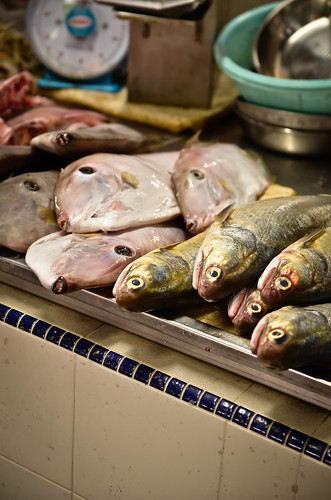
9) Steamed Fish – Seafood plays a prominent role in Southeast Asian diet, especially the fresh kind. Matter of fact, no one buys any of the frozen kind, maybe the odd foreigner living there. One of my joys of going back to Malaysia is to go to the open markets and look at the abundance of seafood that come from the local waters. The Chinese prefer to have their fish simply steamed with a few aromatics like ginger and green onions, along with a light sauce made of soy sauce, sesame oil, and some rice wine – this was the case with this dish when I sampled it.


Chili Crab10) Chili Crab – this is the classic way of cooking this crustacean that has become a signature dish of the region. When I visited a seafood restaurant with my uncle and cousin, there were large tanks of seafood being displayed from which the live creatures were scooped up and whisked off to the kitchen. Everything served in that restaurant was alive just a few minutes before. The crabs here are cooked in a slightly spicy and sweet sauce that is enriched by the use of egg. Upon service, it is customary to lick off the delectable sauce from the shells before breaking them open to get to the sweet flesh. A side order of bread is provided to mop up every drop of that wonderful sauce.

Poh Piah/Fresh Spring Rolls

11) Poh Piah/Fresh Spring Rolls – My maternal grandmother used to make this labor-intensive dish for our Saturday lunches. On this trip, my auntie was gracious enough to cater to my request for this dish that traces its roots to the immigrants from the Fujian region of China. It is basically a fresh spring roll that is not deep-fried like the version most people know. The skin is a very thin sheet of dough that is completely cooked, and it is stuffed with cooked jicama along with some Chinese sausage and pieces of cooked shrimp, and the occasional crabmeat. The sweet sauce and chili paste on the other end of the crepe acts as the glue to seal the roll. I remember as kids, we would hold a competition to see how many we could roll without breakage and how many we could scoff our faces with. Unfortunately, I’m not able to consume as many, but not without the same amount of joy of yesteryear.

Hai Chou/Pork and Seafood Balls12) Hai Chou/Fried Pork, Fish and Shrimp Balls – During this last trip, I wanted to document some recipes that my maternal grandmother used to cook for us with the help of my auntie. One of the dishes was this surf and turf dish. It is basically meatballs consisting of minced pork, minced fish, and diced shrimp that have been rolled up into large sheets of tofu skin, steamed, and deep-fried. The use of cilantro, carrots, green onions, and water chestnuts adds crunch and fresh fragrance to the dish. It is customary to serve them with a sour chili sauce that cuts through the rich-tasting morsels. Eating this dish immediately erased its absence of 25 years from my diet since my grandmother last prepared it.


Leong Yee/Stuffed Fish13) Leong Yee/Stuffed Fish – Another dish that was on my list of documenting my grandmother’s recipes was this fish dish. A delicate process has to be taken to remove the spine without tearing the fillets while keeping them intact on the fish. The fillets are scrapped of the flesh, minced with some pork, mixed with aromatics, then stuffed back into the fish cavity, and fried until fully cooked. The whole fish is simmered in a soybean paste, garlic and ginger sauce until it is tender and has absorbed its savory flavors. Like the above offering, tasting this took me back 25 years when I last had this dish when grandma was still alive. Lots of memories, indeed.

A second installment on the rest of the dishes will follow soon. Hopefully, this blog has whet your appetite for more Malaysian delicacies and the myriad of wonderful dishes.

Malaysian Noodle and Rice Dishes

Petaling Street, Kuala LumpurSome of you must have been wondering where I have been the last few weeks due to my lack of posting. I just got back from a month’s trip to visit my family, relatives, and friends in Australia and in my country of origin, Malaysia. It was a chance for me to reconnect with them and to reestablish relationships across waters after a long period of little contact. Equally important was the opportunity to catch-up on the food that I grew up on which I longed to savor after being away for a number of years from my “childhood home” that forms a big part of my psyche, the repository of an early gustatory conditioning that is deeply imbedded in my palate. Although I spent most of my time with family members in Australia, I was equally treated to good Malaysian cuisine there due to the large Malaysian immigrant population that made their way due to its close proximity to this Southeast Asian nation. In other words, I was never lacking of good Malaysian treats during my whole trip. Here is the run down of the Noodle and Rice dishes from the plethora of dishes that I savored:

Sydney 004.jpg

1) Har Meen/Penang Prawn Mee: After dropping my bags off upon my arrival at Sydney, my sister took me out to a small Malaysian eatery and I had this noodle soup. The broth is a spicy and pungent shrimp stock paired with egg and rice noodles, bean sprouts, and topped with bits of pork and fresh shrimp. A dollop of cooked chili sambal is obligatory to add the extra heat and richness to this dish. A great start to my trip especially since I was arriving in the middle of winter Down Under.

Sydney 017.jpg

2) Chow Kueh Teow/Stir Fried Rice Noodles: This is a favorite among many Malaysians and it is usually the litmus test of the kitchen’s cooking level. Broad rice noodles are stir fried with egg, bean sprouts, Chinese sausage, and shrimp. The addition of light and dark soy sauces gives it the distinctive flavor, and the high heat searing in the wok results in the characteristic caramelization. In the old days, a sprinkling of crispy pork fat and the use of lard were standard, which add a certain unctuousness, but seldom practised these days – what a pity.

Sydney 022.jpg

3) Hainanese Chicken Rice – Another popular dish. Chicken is lightly simmered to a point which the collagen under the skin is still intact and not cooked out. The broth is used to make the rice and the soup that are served together with the meat pieces. The sauces also take a prominent role since they are instrumental in adding flavor to the rather bland pieces of chicken: ginger chili sauce and thick soy sauce.  A perfect lunch.

Sydney 048.jpg

4) Nasi Lemak/ Coconut Rice – This national dish’s main star is rice cooked with coconut milk and galangal root. The sides are usually dried whitebait and peanuts, cooked chili paste, boiled egg, fresh cucumber, chicken or fish curry. A simple version of this dish is usually a breakfast staple – a spicy start to the day! My flights on AirAsia to Malaysia had a delectable rendition of this national dish and I ordered it on both ways. Sedap! (Yummm)

DSC_9556.jpg5) Chee Cheong Fun/Pig Intestine Noodles – OK, these are not porcine guts! They are steamed sheets of rice noodles that are rolled up and cut to resemble that animal part. The sides of cooked soybean sheets stuffed with fish paste and a few fish balls make this quite a complete meal. The dousing of sweet hoisin and chili sauces add the sweet, salty and spicy notes to this breakfast dish. This brings back memories of my mother buying it from the morning market for our breakfasts.

DSC_9705.jpg

6) Wat Ton Hor Fun/Cantonese Style Noodles in Sauce – Pan-seared rice noodles are doused in a light broth that has been enriched with egg whites, thus giving its name of “smooth egg sauce”. Bits of shrimp, squid, pork, and fresh vegetables make this dish well-balanced in flavor and as a complete meal. The addition of pickled green chilis aids in cutting through the savory sauce as well as providing the spicy note to this otherwise mild dish.

DSC_9792.jpg7) Kueh Chang Nyonya/Nyonya Stuffed Rice Dumplings – This rice dumpling comes specifically from the Peranakan culture to which I belong. It is glutinous rice stuffed with a savory and fragrant concoction of pork, chinese mushrooms, candied melon, and coriander powder. The dumpling is wrapped in bamboo leaves and boiled until completely cooked with the dumpling having absorbed the aroma imparted by the leaves. The customary light blue coloring comes the use of a pea flower. This was a favorite of mine growing up and it reminds me of watching my paternal grandmother making these dumplings specifically for the Summer Solstice, June 22nd.
.
.
.
.
.
.
.
.

DSC_0001.jpg8) Banana Leaf Rice – With a rather sizable South Indian population in Malaysia, many folks have taken a liking to this tasty meal that is served on Banana leaves. Servers will come around and pile on top of the rice scoops of curries, meat, fish, vegetables, pickles, and crackers. It is one of the rare opportunities when I get to “play” with my food with my hands and eat it with no utensils. Unfortunately, the use of banana leaves has fallen to the wayside and they have been replaced by paper made to look like the leaves themselves. Thanks to my college buddy, Vijay (yes, that’s him stuffing his face), and his wife, Yvonne, for taking me out for this great treat.

DSC_0062.jpg

9) Thousand-Year Egg and Pork Rice Congee – This breakfast staple is a rather humble and simple dish that has been elevated to a more refined version found in Dim Sum houses. This rendition has a smoother texture that has been enriched by the use of meat stock and the addition of lean pork meat and the strong-tasting thousand-year egg. The addition of fried Chinese croutons adds the textural contrast to the gruel-like dish. This reminds me of a raw fish version that my grandmother used to take us to in Petaling Street for breakfast when I was a young child. Simple yet soulful.

DSC_0362.jpg10) Ngow Nam Meen/Beef Noodle – This famous dish has been served at the same location, Lai Foong Coffee shop (see first photo), for as long as I recall, on the edge of Chinatown. Slices of beef with beef balls are paired with noodles, salted radish, pickled mustard green, all tied-in by a rich beefy broth. The chili sauce side is mandatory to cut through the richness of the dish. However, during my last visit, I was a bit disappointed by the slight insipidness of the broth and the lack of the sour mustard green that I recall from yesteryear. But it was definitely worth the visit just for memory sake.
.
.
.
.
.
.
.
.
.

DSC_0004.jpg

11) Mee Suah – This dish hails from my Peranakan roots and I was pleasantly surprised by its presence for breakfast one morning at my aunt’s place. It is very fine vermicelli noodles cooked in a meat broth and served with some minced meat, white pepper and fried shallots. That morning, it was served with fluffy eggs mixed with dried shrimp, which was equally delectable. This was a rare treat for me and a great start for the day.

DSC_0024.jpg12) Kari Mee/ Curry Noodles – Malaysians never get enough of spiciness especially the curries that have been influenced by the Malay and Indian cultures. Here, we see a marriage of a curry dish with Chinese noodles. But this version takes it another level with the addition of roast pork, cockles and braised chicken feet. Yes! I love chicken feet and most of you will be grossed out by this, especially the fact that I enjoy it for breakfast too. The squeeze of Kalamansi lime provides the citrus hit that cuts through the richness and spiciness.
.
.
.
.
.
.
.
.
.
.

DSC_0105.jpg13) Lam Meen – My auntie took me to a coffee shop for breakfast after paying respects to our ancestors at the cemetery. This place is reputed to serve the best Lam Meen in town. It is thick wheat noodles, cooked al dente, enveloped by a thick tasty broth studded with pieces of chicken and shrimp. This reminded me of my maternal grandmother’s version that she would cook for our Saturday lunches – a classic Cantonese noodle dish.

DSC_0225.jpg

14) How can you spot a Malaysian? By the amount of fresh-cut chilies that he/she is consuming with the noodle and rice dishes. A bowl of cut chilies is de rigueur with the meal and they are served in both coffee shops and high-end restaurants. My maternal grandmother even brought a jar of this condiment to Hong Kong years ago to spice up the rather mild Cantonese dishes. No doubt she inculcated the love for pickled green chilies in me – can’t get enough of them!

DSC_0230.jpg

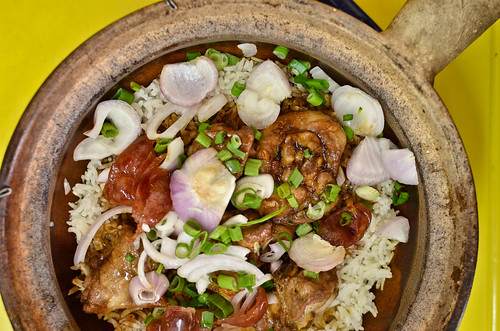
15) Nga Po Kai Fan/ Clay Pot Chicken Rice – This is one dish that was a must-have on my trip to Malaysia and they are served in local coffee shops around the city. Cooked white rice is served in searing-hot clay pots, topped with pieces of chicken, Chinese sausage, and seasoned with light and dark soy sauces. The mixture is mixed well before serving, while the heat from the pot crisps up the bottom of the rice, much like a Asian savory rice krispies. Bits of sweet raw onions and green onions provide the fresh flavors to this rich-tasting dish. I’m glad my cousin took me all the way across town when another eatery was not open during lunch.

DSC_0469.jpg

16) Laksa Lemak/Curry Noodle Soup – The quintessential lunch noodle dish encapsulates Southeast Asian flavors with a spicy broth enriched by coconut milk, and spiced by lemongrass and Kafir lime leaves. The bowl I had while I was visiting my parents in Melbourne was replete with bits of squid, shrimp, mussels and fresh vegetables, which made it a seafood delight. Bits of fried tofu are obligatory in this dish that add a lightness to this rich dish.

DSC_0642.jpg17) Hokkien Mee – This noodle dish traces its roots to the Fujian area from which many Malaysian Chinese can claim their roots. It is thick wheat noodles and rice vermicelli that are wok-seared with lard, seafood and the distinctive dark soy sauce that adds a slight sweetness from the molasses flavored sauce. The addition of crispy pork fat adds the necessary richness to the dish, as how it was served to me in Australia. This dish brings back memories of my father driving to downtown Kuala Lumpur and parking on the main street as we waited for our late night supper, usually after a badminton game – such maneuver is not possible anymore with the crazy traffic nowadays.
.
.
.
.
.
.
.
.

DSC_0660.jpg18) Chow Toong Fun/Fried Beanthread Noodles – This is a dish that I have not eaten much of but I appreciate its lightness due to the use of noodles made from Mung beans, those used to make bean sprouts. Again, like most noodles, we get Surf and Turf here with the use of Chinese sausage and shrimp. The addition of bean sprouts adds the necessary crunch to the delicate noodles.
.
.
.
.
.
.
.
.
.
.
.
.
.
.

DSC_0664.jpg

19) Assam Laksa – This complex tasting dish hails from the northern island of Penang where there is a strong Thai influence from its neighboring territories. The soup is spicy, fragrant, and sour from the use of tamarind as its base. The use of Spanish mackerel or sardines adds to the rich flavors, while the use of mint, pineapple and cucumber brings fresh qualities to this rather “dark” soup. It is a favorite of mine and I definitely miss my grandmother’s rendition that she would whip up for our wonderful Saturday lunches.

Oodles of noodles and plates filled with flavored rice. As you can see, we can’t get enough of these staples, considering the variety of dishes that they come in and the myriad of flavors that satiate the hungry eater. Just don’t forget to ask for another serving of fresh chilies or chili paste that will make this culinary experience both fiery and complete. When in Malaysia, eat like a Malaysian, which means with lots of chilies. No doubt!

Café Citron

DSC_9115.jpgIn a modern hectic world that lacks enough hours, or so it appears, we seem unable to escape from a retail market that has nearly everything that caters to all our whims and wishes, from the mega-markets of Costco and Wegman’s to eating establishments that offer a fare encompassing a wide variety of cuisines, whether it is Global Fusion (I ate at such a place but it was not worth writing about), Pan-Asian (see blogs on Café Asia and Hee Been Bistro), Pan-European, or the many variations out there.  But one cuisine that has resisted such grouping has been the cuisines of Latin America.  Why?  Try calling any Latino a Mexican, Puerto Rican, Dominican, or Salvadorian without first ascertaining his/her background; the usual acerbic response (“Excuse me, I AM …..) is a good indicator of the nationalistic sentiment that is proudly worn with a certain tinge of defensiveness.   With a huge Latino population in the DC area arriving from different nations and subsequent generations being born locally, this subtle yet well-demarcated border is slowly evaporating away with one group incorporating cultural traits and habits from those once viewed with suspect – look at the current popularity of Dominican Bachata music among all Latino groups.

So, when an online coupon offer popped up for a Pan-Latino restaurant, I knew I had to click BUY and explore this unique establishment.  Café Citron is located a few doors away from Kababji, a recently reviewed Lebanese restaurant, just south of the busy and pedestrian-heavy Dupont Circle, a neighborhood that has been become chic among the young professionals who have homogenized this once gay ghetto – a large Anne Klein store popping up and the demise of a much beloved gay-oriented bookstore pretty much sealed this deal.  From the outside, the restaurant is hardly conspicuous that it is easy to overlook its narrow entrance that seems to be overshadowed by nearby encroaching establishments.  But once pass its entryway, you step into a long room filled with banquets on one side and a long bar on the other.  I chose to plop myself down at a table upstairs that overlooked the main floor, hoping that I would get some sufficient decent light for this review.

DSC_9129.jpg

Since I arrived during their Happy Hour (4:00-7:30 p.m.) and the place was already packed with young early diners, I decided to make my selections from the Starters/Tapas menu.   I placed my order of 3 meat dishes from the “Qué Rico” (How Tasty) section and an equal amount from the “El Mar” (The Sea) side.  For the first meat dish, I chose a house favorite of Venezuelan Empanadas, of which one was stuffed with beef and the other with chicken.  Taking my first bite, I marveled at the cornflour dough that was crispy on the outside but moist and slightly spongy under its exterior.   Both fillings had moist pieces of meat that were both slightly sweet and savory at the same time, with a hint of cumin to tie in the opposite flavors, much like a Bastilla dish found in Moroccan cuisine (cinnamon is used in this case).  The side of spicy and garlicky cilantro sauce added the necessary acidity and spice kick to these small morsels. No surprise that these tasty bites are a house favorite judging by how quickly I devoured them.

DSC_9124.jpg

Bolivian Sonso with Beef came as the next meat selection. Cubes of beef have been marinated in “exotic spices” and sautéed; they were tender and had the dark spice notes, but initially seemed a bit under salted until I got accustomed to the flavors.  The patties of yucca mash and cheese were very delectable and these discs more or less stole the beef’s limelight.  The outer part was crisp from the breading and frying, but rich and fluffy in the middle, providing a certain comfort-food quality.  The use of yucca here points to the dish’s origins, most likely from the eastern lowlands bordering Brazil since this tropical root does not grow in the interior highlands.  The side of the same cilantro sauce above added the necessary notes that lightened the rather filling patties.

DSC_9146.jpg

Another Bolivian starter was the next choice: Bolivian Potato Cake.  A thick pancake made of mashed potato was stuffed with seasoned ground beef and pan-fried, looking much like a Johnny Cake.  It was rather fluffy with bits of seasoned beef in the middle.  I felt transported to this landlocked nation with the potato cake knowing that the tuber is an indigenous staple of the Andean highlands.   Being potato, it was a little stodgy and greasy from the frying.  However, the side of spicy salsa and fresh Pico de Gallo added the necessary relief to the heaviness of the dish; an interesting dish though.

DSC_9130.jpg

OK, enough meat for me, which seems to be staple of Latin-American cuisine.  Seafood makes the other mainstay in most Latin-American diet due to the many nations that are surrounded by large bodies of water.  My first order was Calamari a la Plancha.  This type of seafood cooking is typical at seaside resorts found in Spain and South America.  Most of the time, I’m quite leery of the way that most restaurants cook this mollusk, which results in a rubbery toughness.  But in this case, it was tender, near fork tender.  The large quantity of these seafood rings exuded smokiness from the high-heat searing on the flat griddle.  The squeeze of lemon juice was all it needed to make this simple clean tasting dish soar.  All this seafood for just $8 during Happy Hour makes it a must-order.

DSC_9138.jpg

After having recently sampled another restaurant’s rendition of Ceviche and coming out dissatisfied, I decided to give this establishment a try.  It arrived in a beautiful scallop-shaped bowl brimming with pieces of shrimp, fish, and chunks of fresh avocado, surrounded by a pile of fresh nacho chips.  I must say that I was delighted that I ordered this dish since the shrimp and trout pieces (thank goodness it wasn’t the muddy Tilapia used in the last place) carried a clean tasting citrus flavor without being too acidic.  The use of cilantro, fresh tomatoes, sweet red onions, and jalapeño peppers added the extra notes to the seafood, while the nacho scoopers provided the textural contrast to the moist and tender morsels.  My only criticism is the slight iodine flavor in the shrimp which was the result of the use of table salt – sea salt would impart a cleaner taste.  This wonderful version brought my taste buds to the seaside villages of Peru and Chile, renowned for their renditions of this pickled seafood dish.  For $9 during Happy Hour, this would fill your mouth with some seafood joy.

DSC_9142.jpg

The last dish originates from Mexico, namely Baja California.  Shrimp Corn Tortilla Tacos is a regional specialty that takes advantage of the abundance of seafood in the northwestern coast of that country.  I quite enjoyed this dish with the homemade corn tortillas that had a faint scent of corn and lime, the rather firm but well-seasoned pieces of grilled shrimp, and the pieces of ripe avocado that lent a richness to these wraps.  As with tradition, the tortillas were the soft kind and they came in doubles to be able to support all the bits of seafood goodness.  The cilantro leaves and red onions added some pungency, herbal fragrance, and sweetness to the shrimp, while a squeeze of lemon juice, also customary, gave the tacos the citrus hit that made them even more delectable.

DSC_9170.jpgPan-Latino is here to stay, and I am thrilled that Café Citron is the trailblazer in an over-saturated market of Latino restaurants, especially in the Washington DC area, offering a wide variety of tasty offerings from the myriad of Latin-American cuisines that reflect their unique history and their regional and topographical differences.  Looking through the menu, I am tempted to pay this establishment another visit soon to try their other dishes that are Cuban, Peruvian, Mexican, or Bolivian-inspired that seem to evoke unique flavors and combinations.  Maybe I will end up getting up and shuffling my feet during the free Salsa lessons (offered twice a week) or clapping my hands while the Brazilian Samba dancers were showing off their incredible sensual dexterity during a mid-week visit that livened up the place – as if the delicious food needed a strong supporting actor at all.  Entertainment aside, I will be returning for the great bites, the variety of dishes, and the low prices especially during Happy Hour. ¡Bienvenido Pan-Latino!

Cafe Citron on Urbanspoon

Bridgeville, DE

DSC_9031.jpgTradition, Tradition, Tradition!!!! Remember that famous song from the Broadway musical, Fiddler on The Roof? We can’t seem to escape from these customs that mark the passing of time with habitually repeated events laden with a sense of meaning associated with them. This is the case when the warm weather comes around between my close-set of friends and me. It usually spells time to head to the beach, specifically Rehoboth Beach, DE. Having already gone there as a group for nearly 15 years, we have developed certain traditions: hearty breakfasts consisting of bacon, sausage, tarragon omelet, and toast with local fruit jams; grilled steaks and local sweet corn for dinner; a day (ok, a couple) at the Outlet Malls (tax-free); hanging out at Poodle Beach (end of the boardwalk) in the afternoons until the rented umbrellas are removed; and stopping by Jimmy’s Grill on the way back to DC/MD on a Sunday afternoon.

Jimmy’s Grill is located within the limits of the quiet and quaint town of Bridgeville, DE, on the Business Route 404 corridor that used to serve as the main thoroughfare to Rehoboth from DC Metro – there is now a bypass around the town known for its 25 mph speed traps. I remember stopping there for the first time years ago. It had a homey feel to the place, but unfortunately, they closed by 6 p.m. on a Sunday and they did not take credit cards then – I had to time my departure from the beach to make it there on time.  But 6 years ago they were bought over by the employees (from what I heard), and the place went through some redecorating while maintaining its charm, along with longer hours and the acceptance of credit cards. One thing that has not suffered any change has been the quality of the food and the prices.

DSC_9036.jpgWalking into the establishment, you immediately get a sense of home comfort and of local community. Plastered in the vestibule are photos of local folks posing with the owners. Passing through it you are immediately assaulted by a huge cake display tower that would make your eyes bug out from the equally towering home-made cakes that scream “leave some room for me too.” The place is usually filled with a combination of local folks and visiting beach travellers, usually repeat customers. There is nothing fancy about the decor with a few vintage movie posters above the simple banquets or cafeteria-like tables and chairs. But this is not why we, as well as the other diners, are here for.  Can I have the menu, please?

DSC_9047.jpg

Tradition! Fried Chicken! This place is known for this quintessential comfort food that is so straight forward and not fussy at all. That is the only dish I order here because it is that good and I don’t have it anywhere else – where else would serve lots of chicken but in this area renown for the chicken farms that dot the highway. I usually get a piece of moist breast that is well-seasoned throughout the meat (not just the topping) with a crispy, equally seasoned and not overly thick batter. Diet out of the window, I would dig into this extremely irresistible morsel with no guilt, shame or remorse, but with a few dashes of hot sauce. Need I say more? The proof is the in the greasy fingers and meat-strippen bones left on the plate.

DSC_9048.jpg

Tradition! The side dishes! These small dishes are the equal stars in this eatery that sometimes attempt to steal the limelight from the mains. My favorites are usually the Corn Pudding, Collard Greens, and Lima Beans. The corn pudding is studded with fresh kernel of local corns (corn country here also), slightly sweet, slightly eggy, and quite light for this bowl of rich deliciousness – a must-order for me, always! The collard greens are de rigueur for me as well for its long cooking, delicate seasoning, and the lack of any meat fat in the stock, which I appreciate – a couple of dashes of hot sauce on it and it’s gone. An order of Lima Beans were smooth, silky, not grainy, with bits of tomato that provided some sweet acidity to the starch. I nearly forgot the Scalloped Potatoes that are thinly sliced potatoes covered by a cheesy sauce that make them irresistible and calorie-amnesia producing. Other sides ordered by my buddies included cucumber salad and macaroni and cheese, which seem equally tasty judging by the empty bowls. At times, they offer the local corn-on-the-cob as their special – if you are not corned out by now, you should try it. I could eat just order an array of their sides as my meal and I would be in heaven.

DSC_9046.jpg

The eatery has daily specials that cater to the traveller as well as the locals. Usually on Sundays, there is Prime Rib or Chicken with Slip Dumplings. On this given day, Rockfish stuffed with Crabmeat was on the menu, which was ordered by my bestie’s bf. A large fillet of the local fish had a mound of lump crabmeat stuffing perched on top. This man tore into his meal like he had never eaten before, and judging by his closed eyes and slow side shaking of his head, I knew it was good – pity I didn’t get to savor a single morsel. Another buddy was so taken by this man’s foodgasm that he had to place an order to go (“Can I have what s/he is having.”). He later reported that is was very good but a little dry, perhaps due to the travelling. Next time, I will place on order especially all that seafood for $14.  Another friend’s order of Chicken with Stuffing was tasty and very homey, with chicken breast stuffed with bread stuffing, coated with a thick gravy – it tasted like what a good home cook would serve to her hungry loved ones.

DSC_9049.jpg

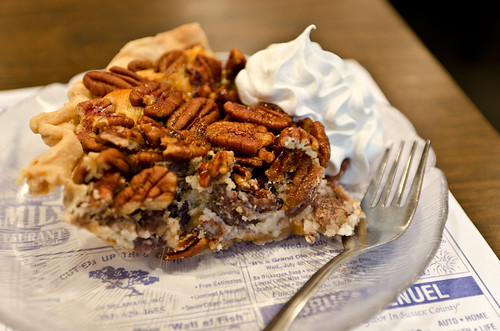
DSC_9052.jpgOK, let’s cut to the chase and Let’s Eat Cake! The Rockfish Devourer’s order of Pecan Pie arrived first. But before he could take his first bite, I had to take a picture of it. And did I get a good stare from this famished man until I finished taking the singular shot, even though he had already polished the fish in no time. Again, he had foodgasm, and he even picked it up with a mound of whip cream and ate it like a cookie – it must have been that good! My bestie took out an order of Banana Cake. I tried a forkful and I was amazed by the lightness and moistness of the cake that was filled with banana flavor, small pieces of walnut, and hint of vanilla, all not being too sweet. I could have eaten the whole huge slice even though if I were full, but I would get evil-eyes from him. Another take-out order of Coconut Cake for another friend proved to be equally delectable and successful as the above concoction with a light moist vanilla cake coated with sweet frosting and sweet coconut. Let them eat cake, as well as us!

DSC_9029.jpg

DSC_9112.jpgA new tradition: Last year I stopped by a roadside stand, Evan’s Farm Produce, on the same highway not too far from Jimmy’s Grill, and I bought some local corn as well as a jar of their home-made orange marmalade. Tasting the marmalade at home, I was delighted by the not overly sweet jam, the soft bits of orange rind that exuded a slight bitterness, and the slight acidity from the use of orange juice as the jam. I literally fell in love with this sweet bitter preserve, and I was sad when I ran out of it a couple of months later. So, on my way back to the beach last week, I stopped by the stand and bought 3 bottles in addition to a recommendation, Triple Crown Preserves, consisting of Strawberries, Red Raspberries, and Cherries. Wow! My friends loved this berry-packed jam so much that they finished off half a bottle in a single weekend, and I bought another bottle on my way home, just before stuffing my face at Jimmy’s. Lookout for this fantastic stand just when the Bridgeville bypass merges with Route 404 heading eastward to the beach.

So, on your way to Rehoboth Beach, make sure to look out for Jimmy’s Grill for its wonderful home-style cooking, especially the fried chicken and the wonderful side dishes. Oh, also don’t forget to take home a huge slice of cake and pie. Also, make it a point to stop by Evan’s Farm Produce stand just a mile down the road to stock up on some local corn, orange marmalade, and Triple Crown jam. After sampling the food and goods from these two establishments, they may become new traditions for you and on your beach travels. Happy Summer and Safe Travels!

Jimmy's Grille & Catering on Urbanspoon

El Nopalito Grill

One cuisine that has received its fair share of bad rap in this country is the one south of our border – Mexican.  Most of it can be attributed to the mediocre and uninspiring fare served in Tex-Mex restaurant that most of us have eaten as a foray to our experience with this cuisine.  However, my introduction to its true authenticity began when I was teaching in a Catholic girls school in Bladensburg, MD.  At the bottom of the hill was a fast-growing pocket of Mexican immigrants.  Not being too shy to find a good eat anywhere, I asked the locals and they pointed me to a small hole-in-a-wall.  It was in this dive that I discovered true Mexican dishes – Mole Poblano, Shrimp Cocktail, Mexican Ceviche, Quesadillas, Enchiladas, Tamales, and exotic drinks like Horchata, Tamarindo, Fruit Shakes and Mexican Sodas (made with real sugar).  This experience provided me the opening door to a rich culinary tradition, and I knew that this was a vast territory that I had to explore.

Having received an online offer to El Nopalito Grill, I was excited to try another Modern Mexican restaurant after having discovered Casa Oaxaca (see blog) a couple of months back.  It is located at the corner of a rather busy intersection, nestled between several businesses in a strip mall located in the upper reaches of Silver Spring  – this MD suburb city is so extensive hence it is easily confused with neighboring cities at the same time.  Looking at the restaurant’s online site, I was impressed by the owner/chef’s resumé which reads as a pedigreed culinary training: stints at Le Pavilion, Red Sage, Coyote Cafe, Bistro Provence, Four Seasons Hotel and Filomena, all restaurants that ring a familiar bell to the DC cognoscenti.  With a new Spanish teacher colleague in tow, I stepped into El Nopalito Grill with some anticipation and a hungry stomach.

DSC_8873.jpg

A good indicator of the quality of cooking in an establishment is usually found in the simple things, like chips and salsa.  The Nacho Chips were light and almost greaseless, and my dining partner remarked that the Salsa was freshly made judging by the lack of a canned metallic taste or high acidity.  It was indeed fresh and filled with small chopped tomato pieces swimming in a slightly sweet tomato sauce spiked with some pungent onions, fragrant cilantro, and searing chiles.  Another simple yet telling dip is the Fresh Guacamole.  It came prepared a la minute with large chunks of ripe and creamy smooth avocado with bits of sweet onion and seasoned with just salt, very much like how guacamole is simply made in Mexico (the US version tends to come with tomato, cilantro, and lime juice).  These dips were very tasty and refreshing, good enough to build up more anticipation for what was to come.

DSC_8899.jpg

DSC_8885.jpgWe decided to try out a couple of salads.  The first was the Mango and Jicama Salad.  Slices of  julienned mango and jicama along with thin slices of red onions were sitting on a bed of fresh greens.  I enjoyed the combination of the sweet soft ripe mango paired with the rather bland crunchy pieces of Jicama, akin to the texture of pear sans the sweetness.  The red onions slices added some sweet pungency to the dish, and the avocado salad dressing was good but not discernible in any special way; perhaps it was overwhelmed by the onion and mango.  But it was refreshing indeed and not your typical salad fare.  An order of Palmito Salad came with heart of palm rings along with slices of orange on a bed of salad.  The elements on the salad felt disparate and even the cilantro dressing could not serve as the liaison between the non-binding ingredients.  It was not bad, just ho-hum.

DSC_8881.jpg

As for our main courses, we made our selections from the Tapas menu.  Since my new colleague is a pescatarian, we zoned in on the Ceviche.  It came with pieces of marinated fish and shrimp sitting on a bed of lettuce and pickled onions, and topped with thin fried tortilla strips.  Although the menu states that the dish comes with jalapeño peppers, I could not see any or taste the spice heat.  This flavor profile would have made a difference since the dish carried a one-note acidity which did not elevate the seafood pieces.  Furthermore, the use of fish, I suspect Tilapia, was unfortunate as it had a muddy flavor that overwhelmed the whole dish.  The pieces of shrimp were plump and sweet and they were pretty much the saving grace in the dish.  Realizing that these small missteps in the Ceviche could be overlooked, I knew there were some dishes on the menu that would definitely get my attention.

DSC_8888.jpg

Another dish suitable for any pescatarian is the Chile Relleno.   Traditionally, this dish is filled with a meat or cheese stuffing.  However, this restaurant’s rendition takes this humble concoction to another level.  The roasted poblano pepper was stuffed with a melange of shredded crabmeat, bits of shrimp and a mild cheese, sitting on a pool of tomato and tomatillo sauce.  The slightly piquant and smoky pepper made the perfect partner to the mild, seafood-sweet and rich stuffing that made the dish irresistible to this diner.  The well-made sauces provided a slightly sweet and acidic element to each bite, which brought more interesting notes to the whole dish.  A definite order in my books.

DSC_8897.jpg

I ordered the Duck Tamale which is a novel dish for me and an interesting spin on this regular Mexican fare.  However, I was later told that the kitchen had run out of it, and I settled for the Chicken version with a certain sense of disappointment.  However, the first bite proved to be quite the opposite of a let-down.  The steamed white cornmeal was light and fluffy, packed with flavor and studded with bits of crushed fresh corn which brought a slight sweetness and earthiness to the simple dough.  The chicken stuffing was shredded pieces that were still moist and well-seasoned.  The banana leaf that wrapped the tamale during its steaming had imparted a fragrant vegetal note to the whole dish, and it provided a beautiful design element to the plate.  Here, we see another example of the Chef’s ability to take a simple humble dish to a sophisticated level.  If this is the Chicken Tamale, I cannot wait to taste the duck version on my next visit.

DSC_8892.jpg

One dish that called my attention while perusing the menu, and to also satisfy the meat-lover reader, was Beef Carnitas.  A thin piece of flank steak came grilled and paired with a trio of yellow, green and poblano mole sauces.  The steak was tender, smoky from proper grilling, and rich tasting from some ageing before its visit on the hot grill.  The different mole sauces added notes of acidity, salty, sweet, and smoke (dried chile exudes this note) to the already rich-tasting dish.  What I appreciate about this dish was the level of care in the cooking of the meat and the delicacy of the different sauces that did not overwhelm the beef.  This dish will definitely satisfy the beef lover, despite the small portion which was enough for me, for its wonderful cooking and flavors.

El Nopalito Grill serves authentic Mexican fare that reflects a rich culinary tradition that does not resemble what most Americans are used to or familiar with.  Despite a few small missteps in a couple of dishes that we savored, the successful ones point towards a knowledgeable and skillful kitchen that delivers delectable dishes that are well-made and quite sophisticated at times.  Here, one senses this ethnic cuisine heading in a new direction that would entice the novice.   This restaurant may tempt you to hike up into the suburbs to savor the Mango and Jicama Salad, Tamale, Chile Relleno or the Beef Carnitas.  I see another visit for me soon to sample the rest of the menu in the near future.

El Nopalito Grill on Urbanspoon

Top Spanish Cafe and Catering

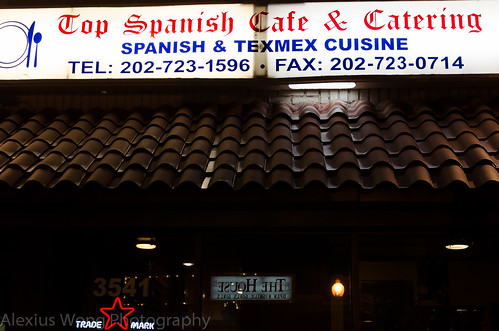
The Petworth neighborhood in DC has a reputation for its share of funkiness and shadiness. It tends to contain characters from lower-income levels that lead a “marginal” lifestyle which would make anyone a bit uneasy walking up and down Georgia Ave, its main thoroughfare. To make matters worse, its reputation for the drug activity during its yesteryears still haunts this part of town. But this is where I chose to go on a Friday night with a dining companion to try out a Spanish-style restaurant. Walking up to the place, the artistically challenged outside sign sadly does not exactly invite the street-walker (not the other kind) to pass through its doors. Furthermore, its location across from “The House” (look at the reflection in the door in the photo below – that’s the telltale sign), had many online bloggers hesitant to visit this eatery. However, in the same sweep of the pen (well, keyboard), they also praised the place for some noteworthy dishes that they claim make the trip worthwhile – I had to check it out.

Top Spanish Cafe and Catering

Upon entering Top Spanish Cafe & Catering, you will notice all the wood everywhere, from the half-paneling on the walls, the small bar across the front door covered in similar fashion, to the high-lacquered solid wood tables and chairs. It is obvious that this place has gone through some renovation, and the end-to-end large windows create the necessary barrier between the observer and the observed (which is which is usually determined by the characters involved). It was quite sparse on a Friday night with only another couple across from us. A sudden storm must have also scared some folks away with its veracity and high winds – it turned out to be a microburst that brought down many trees. However, despite the challenging circumstances and my friend’s uneasiness siting next to the window, I was eagerly anticipating discovering what the other bloggers had been raving about.

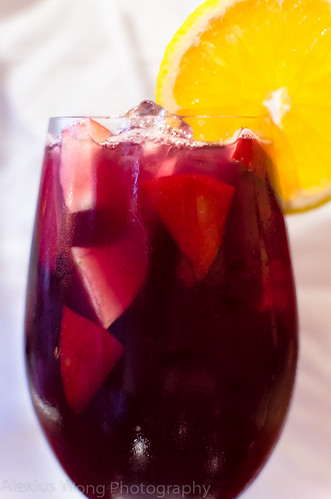
Red Wine Sangria>I decided to order a glass of Sangria, which I had read about online. It had the right balance of red wine, fruit juices, a hint of cinnamon and cloves without going overboard, and it came in a large glass with chunks of fresh apples and slice of orange. This was the perfect thirst quencher that I needed after dealing with the challenges of getting to the place. What I appreciated about this sip was that it was not overwhelming with alcohol nor was it too diluted with juice. It reminded me of my college days in Spain when I was sitting in a mesón waiting for an extremely tardy friend who did not show up until nearly an hour later – when he got there I was quite tipsy and I discovered Sangria overconsumption. Time and wisdom have proven to me that all I needed was just one big glass of this juice-wine cocktail, and it was worth the $5 cost.
.
.
.
.
Mussels a la Romana

For the appetizer, we honed in on a couple of tapas, and the first was Mejillones a la Romana. The bowl arrived filled with medium-sized mussels sitting on a pool of sauce. These mollusks were plump, fresh (not “leathery” when not at their prime), and quite briny to the point of being slightly oversalty – the waitress checked with the chef and he said he did not add any salt to the already saline bivalves. The sauce at the bottom was packed with garlic and slightly acidic from the use of white wine and some tomato sauce. I wished we had pieces of Spanish bread to dip into this wonderful elixir. It was a great start and promising beginning to this experience.

Grilled Squid Salad

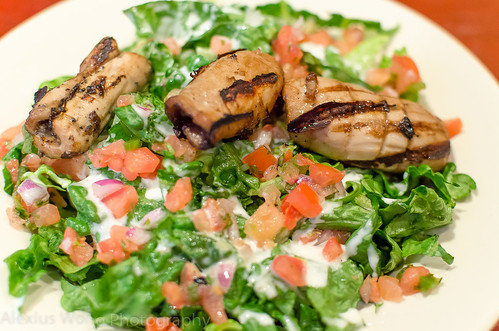
The next starter was the Tender Grilled Calamari. Pieces of the shellfish sat on a bed of lettuce, chunks of tomato, and red onion. The seafood was marinated in garlic, soy sauce, herbs, and olive oil. The pieces were so tender and smoky from the grilling, and we both were amazed by its texture and flavor that made these morsels extremely delectable. The green bed underneath was the perfect pairing with the squid, which provided the fresh light contrast to the smoky bites. I only wish there were more pieces of the delectable squid, but the quantity was justified given that it was an appetizer, and costing only $6 like the above mussel dish.

Seafood Paella

What I came here waiting to try was the Spanish Seafood Paella. Many bloggers and reviewers had mentioned that the dish was a must-order, and ever since my first blog about another Spanish eatery, La Churreria de Madrid (see blog), I have been scouting for another locale serving this dish. And this restaurant’s rendition does not disappoint at all. The dish arrived on the table with a ring of opened mussels, surrounding a mound brimming with clams, squid, shrimp, scallops, fish, peas, sweet peppers, and Valencian rice. The kernels of rice were the right kind being the medium-grain starchier type (should only be this varietal, no other), and they were cooked slightly al dente while exuding some starchiness, perfumed by some real saffron and sweet paprika, and enriched by a good seafood stock. My companion and I were totally amazed by the amount of food, the freshness of the seafood (the mussels were equally briny as the appetizer dish), and the rich flavorings that permeated each morsel. It is a pity that another friend did not make it to this gathering, or not we would have ordered a large pan (paellera) of this Spanish delicacy. Upon speaking with the chef, he told us that his parents hail from Spain, and he sure knows what he is doing with authentic Spanish paella. Yes, the bloggers got this call right, and this seafood wonder cannot be overlooked here, especially when priced at $16 per serving!

Churrasco Argentino

The chef has done stints at high-end Spanish and Latin American restaurants (Jaleo, Café Atlántico), hence the hodgepodge presence of some Latin American dishes among the Spanish ones in the menu. I couldn’t help but notice the Churrasco Argentino when perusing the menu and I decided to give it a try. The dish arrived with pieces of beef tenderloin, accompanied with wedges of roast new potatoes and thick slices of sautéed zucchini. The beef had a rich beef flavor from some proper ageing, slight smokiness from a good stay on the grill while remaining tender and juicy, and the chimichurri sauce consisting of a blend of garlic, onion, parsley, vinegar and oil provided the interesting notes that took the meat to another level. The sides were equally impressive: the baked red potatoes were crispy and fragrant from a rub of garlic and parsley with a crispy exterior and soft fluffy interior; the zucchini slices were thick and cooked just right while maintaining some bite while exuding a slight natural sweetness which brought the some lightness to the overall meat dish. I could not get enough of this dish even though I’m not the usual beef lover. But on this night I was nearly made a convert by this tasty and relatively light (in flavor, not quantity) steak dish.

Top Spanish Cafe and Catering offers Spanish-styled dishes that range from the common Tex-Mex fare to some Latin American and Spanish classics. Realizing that this is not downtown DC and in order to survive in their neighborhood, they have to cater to their surroundings with some rather pedestrian sounding dishes – interestingly, some bloggers have given complements to their Texas Nachos and Burritos. However, among them are some star dishes that point to a kitchen with expert hands that prepare some authentic and extremely delectable dishes, as in the Grilled Squid, The Mussels in Wine, Seafood Paella, and the Steak Dish. I’m looking forward to paying it another visit and savouring The Chicken in Chipotle Barbeque Sauce, The Steamed Salmon with Mango Bourbon White Wine Sauce, The Shrimp Asopao (Latin rissotto), and the Spanish Seafood Soup. This is definitely not your typical neighborhood dive with these kinds of offerings. As some bloggers have commented, this is truly a hidden gem that is worth discovering, and I can see myself a regular at this establishment in the future, waiting to dig into some good Spanish Seafood Paella. I’m quite sure you would be too after you have savoured a heavenly bite of that seafood deliciousness.

Top Spanish Cafe & Catering on Urbanspoon

Simple Pleasures

DSC_8365.jpgMother Nature is spot-on on her regular cycle as she unabashedly announced the official arrival of Summer last week with the first triple-digit heat-searing day of the year during the Summer Solstice.   With the sun keeping us indoors or beating us down during our brief scurries from the car to destination point, nothing comes better to mind as relief from the oppressiveness than either taking a dip in the pool or ocean, or having the quintessential heat buster in one hand – ice cream.   I chose the latter on that given day.

DSC_8297.jpg

DSC_8329.jpgI came across Simple Pleasures while strolling through the Greenbelt Farmers Market some time last year,  and I was curious to see a vendor selling ice cream home-made with local organic milk and locally sourced fruits.  The owner was very excited in telling me all about his creations including one made with blackberries which were seasonal at that time.  Walking around with the cup in my hand, I was baffled by an interesting note, a je-ne-sais-qoui, that trailed at the end of each bite.  I scurried back to the owner and he coyly made a guessing game out of my curiosity which left me completely stumped.  Eventually, he told me that he had put some lavender essence as the back note – brilliant.  That day, I knew I had come across something interesting, creative, delectable, and well-crafted.  I had to discover the location of their store.

DSC_8710.jpgDSC_8750.jpg

The Simple Pleasure store is located in Old Town Bowie, in between the new part of the city and Laurel.  Driving through this rather quaint section, one notices that this charming part has now been a bit forgotten due to its location off the main road and also to the new construction around Bowie, which has made this suburb a home destination for the middle class and the up-and-coming.  The store is located in a house that appears to date from the early part of the last century, judging by its sprawling verandah and wooden construction, alongside similar looking structures that have become Antique stores.  The coffee shop is on the bottom floor past the comfy living room area filled with sofas that beckons the guest to make it home.  In the dining section, tables hold small glass vases containing pretty flowers that add a bit of charm to the simple room that is filled with antiques and European pottery, which also fill up the upper level rooms – the owner was stationed in Europe for a few years, and he and his wife want to bring some elegant charm to the ambience.  Food orders are usually placed in the back where vats of freshly made ice cream are displayed along with some pastries.

DSC_8740.jpg

The following are the flavors that I have tried and I won’t get flowery about presenting them.  Time for “Attaca” like in a previous blog on an Asian buffet joint:

DSC_8316.jpgLemon Custard: A pronounced lemon 0il flavor which gives the lemony kick in the cream without the acidity of lemon juice.  I’m a big fan of this.

Vanilla: Specks of real quality vanilla seeds in a smooth clean flavored ice-cream.  The owner said that some folks are not used to the real thing after having eaten fake vanilla for years.  But I prefer true vanilla that gives a slight heady flavor and aroma that match the smooth pure cream.

Stracciatella:  Ice-cream that has been laced with hazelnut essence and speckled with shards of imported Italian dark chocolate.  A taste of Italia and it is just Divino.

Rum Raisin:  Real boozy without knocking you down, studded with plump rum-soaked raisins.  I can’t get enough of this but I have to drive home at some point.

Dark Chocolate:  This gets as dark as it gets with the use of quality dark chocolate that gives me that satisfactory sweet bitterness from the high cocoa butter content.  This is a definite mood enhancer if you need something to perk you up with.

Strawberry Rhubarb:  This is a classic combination of sweet and slight tartness that I am fond of.  The fruitiness of the strawberries still shine though the rich cream.

Fruit Sorbets – rich with pure fruitiness without the artificial flavors found in the commercial brands.  Not too sweet also.

Obviously, everyone has their unique taste for flavors, and these are just samples of the wonderful offerings.  The flavors do change according to seasonal fruits and the creative whim of the owner, like Guinness or Chai – yumm!

DSC_8726.jpg

DSC_8735.jpgOn my visit during the Summer Solstice, I ordered a childhood favorite, Banana Split.  It arrived in a beautiful frosted glass banana boat, filled with some chocolate syrup, a sliced banana, heaps of my ice-cream flavors of choice, topped off with a mountain of whipped cream and peaked by bits of maraschino cherries.  Bits of pineapple and fresh blueberries were interspersed amidst the cornucopia of sweet and rich flavors.  After I removed most of the whipped cream, I polished off this monstrosity with no hesitation, and I was amazed that I was able to do it without feeling oversated or guilty.  In addition to this ice-cream “meal”, they also offer a bowl of 5 scoops if you are in that kind of mood.  Most of us just can’t enough of a good thing.

DSC_8738.jpg

The pastries are made by the daughter who equally likes to try out her creativity with the seasonal ingredients in these baked goods.  They are tasty, well-made and appropriately rich.  In addition to flatbread pizzas, wraps, and sub sandwiches, they offer Afternoon Tea which includes a cup of properly made tea, served in a teapot on a tea candle, and a serving of pastry or scone – this has been perfect for some cold winters in which I sought relief from the bitter cold with a “cuppa” and a sweet bite.   If you want to get a bit more fanciful,  they offer two types of High Tea which include finger sandwiches, a cheese tray, fruits, and pastries, along with the hot beverages and ice-cream.  However, an order has to be placed 24 hours in advance before showing up; I can never get myself to think so far ahead for this, but I will get my act together one day.

DSC_8721.jpgThe husband-and-wife team are dedicated people who are committed to small businesses around the area and to the community.  They are extremely friendly, and you can sense their passion for the fore mentioned when you engage them in conversation.  They hold a theme dinner one night of the month and it is usually standing room only – the last dinner’s theme was Mediterranean which I regrettably missed out on.  Throughout the week, they haul their ice-cream stand from one farmers market to another in order to serve the various people in the county.  These are passionate, hard-working, and knowledgeable foodies – my kind of people.

In an age of corporate chain coffee shops and ice-cream stores that exude indifference and impersonality, Simple Pleasures brings back the charm of knowledgeable owners who are giving you a part of themselves in the product that they serve.  Walking into their Bowie store, you get good food and ice-cream, warm smiling faces, and a comfy home-like environment to plop yourself down, away from life’s battles out there.  What more can you ask for than just some truly simple pleasures.

Simple Pleasures Ice Cafe on Urbanspoon