Montreal

Montreal, CanadaFor the last few years, a good buddy and I have been travelling to Montreal, Canada, a city that we have fallen in love with for its walking neighborhoods, the quietness of a metropolis, the outdoor cafes and restaurants, the beautiful sights of cathedrals and wide esplanades, the carefree Jazz festival, the air of French sensibility without having to cross the Atlantic, and finally the wonderful cuisine that tantalized us during each visit. This francophone city boasts nearly as many restaurants as the top contender, New York City. Here is a list of eating establishments that we have visited and are worth mentioning.
Grilled SalmonBreaded Shrimp

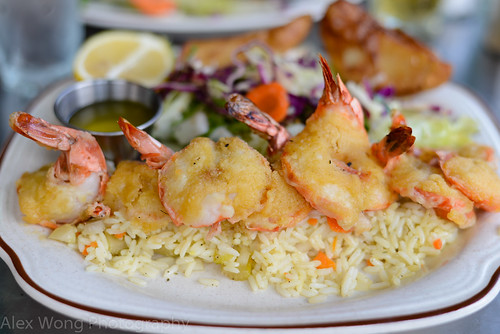
SpanakopitaOn our last trip last week, after getting off the plane and dropping off our bags at the hotel, we immediately made a bee-line to the Le Plateau-Mont-Royal neighborhood, specifically to Rue Prince Arthur, a pedestrian street lined with open air eating establishments. Here you are able to find local Greek restaurants offering great lunch deals, four-course lunches for around $15. On one visit (usually more than one is paid), my starter was a generous piece of Spanakopita pie consisting of light and flaky filo dough interspersed with some crumbly feta cheese and spinach filling made savory from some enigmatic Greek spices; my friend’s lentil soup in another establishment was his favorite starter. My main course (not entrée – here it means appetizer) was a plate of well-seasoned rice, a tasty and well-dressed Greek salad, some crispy wedges of potato and finally the main star, a healthy piece of grilled salmon steak, moist and perfectly cooked. My friend’s portion of butterflied shrimp was tasty but the breading was off-putting to him; he prefers plain grilled shrimp which he has had before at another establishment that has, unfortunately, burned down. Usually a slice of moist cake and coffee or tea are the remaining courses to the long lunches that we relish in. I would recommend both La Caverne Grecque and La Casa Grecque. A walk to the close-by Square Saint-Louis to look at the quaint French-style homes is our digestif from such a satisfying meal.

Portuguese Grilled ChickenPortuguese Ribs

Portuguese Passion Fruit SodaA bit north of the same area, many Portuguese restaurants abound in this rather diverse neighborhood. We met up with a Haitian-American Facebook friend who lives in this city, and he was dismayed when I had told him I had eaten in a specific Portuguese chicken joint a few year ago, renown for large quantities but nothing else. So, on this trip, he promised that he would take me to another that he particularly enjoys. Rotisserie Portugalia is a small corner establishment with a faded obscure sign which makes it a bit difficult to find. Entering the establishment is deceiving since all you see is a grill and a bar counter; however, the small dining room is at the back. Since the chicken is what this place is known for, my travelling buddy and I both got an order that came with a side of salad, rice, and fries. The sides were decent and tasty, but the attention-grabber was definitely the moist and well-seasoned chicken that was slightly smoky from being properly grilled and spicy from some chili flakes; even the breast meat was flavorful and not dry. My newly-met friend’s ribs were quite good but he said he had better on other occasions – sucking those bones clean sure was not a good indicator of slight discontent! The perfect drink to wash all of this down was Sumol, a Portuguese fruity soda, of which the passion fruit version really hit the spot for all of us. Thanks for the recommendation, mon ami!

Rotisserie Portugalia on Urbanspoon

Schwartz's Deli, MontrealEveryone talks about this place – Schwartz’s Deli. It is located in the same neighborhood, and there seems to be a line of tourists waiting patiently to get in on any given day in the summer. I think the place garners more attention from the fact that Celine Dion’s husband bought this sandwich shop for $10m than the reviews of the sandwiches themselves. Since my buddy and I are not excited about Jewish deli food while in Montreal, we have never entered its doors; the long lines are not exactly enticing either. But all the guide books make mention of this place, hence my two cents worth. If anyone has gone in, please let me know!

.

.

.

.
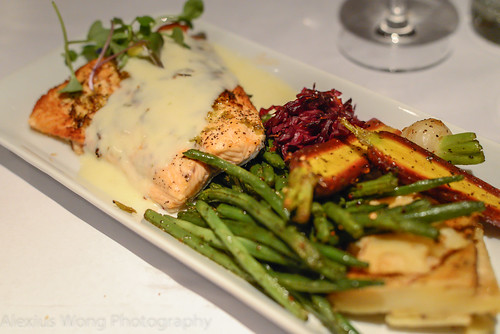
Sauteed Salmon with Garlic Flower Sauce

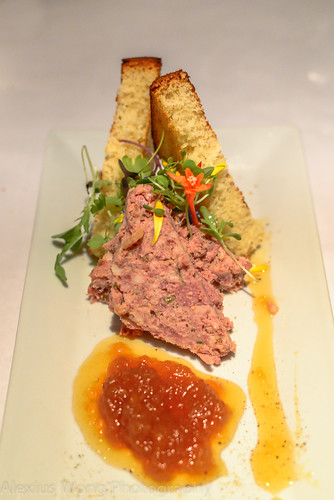
Pork Terrine and Peach ChutneyOn a recent trip, a long-time Salvadoran-Canadian friend took my travelling partner and me to a French-style restaurant around the Le Plateau-Mont-Royal neighborhood. Les Infideles is located off the main St. Denis Boulevard but according to my friend, it is a hidden treasure without the stuffiness of fine dining. The complementary Carrot Soup set the right tone for the rest of the evening with its rich flavors from a good amount of pureed carrot and a full soup body that made this bowl tempting to be licked clean. My friend and I decided to opt for a couple of appetizers since they appeared very appealing especially during the warm week that we had there. The Smoked Fish Plate featured pieces of Trout and Salmon smoked a la minute with Hickory wood that made each moist morsel delectable. The Snails in Blue Cheese Sauce with Puff Pastry was definitely a la francaise with plump snails matched with a perfectly balanced sauce that could have gone overboard. My appetizer of Wild Mushroom tart was bursting with the wild boschiness and the slices of blue cheese sending out its slightly bitter tones, all napped by a rich demi-glace sauce that made this vegetarian dish truly satisfying. My host’s main course of Sauteed Salmon with Garlic Flower Sauce created enough envy to this reviewer’s eyes with the moist piece of fish coated by a rich sauce, accompanied by a bouquet of plump vegetables including the dual-colored carrot that made the dish visually tentalizing. For my main, I choose the Pork Terrine and Peach Chutney which was completely up my alley with the mild and fresh-tasting chilled pressed meat well-matched by a fruity and sweet peach chutney and served with slices of rich Brioche bread. This place is well-worth the hike for its quality cooking, the value (especially for fine French cuisine), and the smart yet relaxed ambience (we complemented the waitress’s eclectic music selection). Another note: this place is BYOB, so stop for a bottle of your favorite vin on your way there.
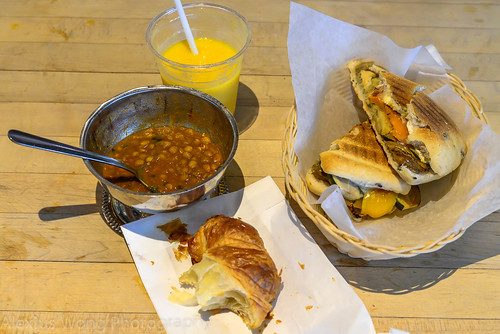
Lunch at Jean Talon MarketLe Marché Jean-Talon, Montreal

Further up from Le Plateau-Mont Royal neighborhood is the Jean Talon neighborhood which is renown for its large open market. This is where we headed one early afternoon to have lunch. Around the food court you will find different vendors serving a wide variety of cuisines, an indication of the influx of immigration to this part of Canada. My friend had some Indian-styled lentil soup that was spiced by a touch of cumin, a rich buttery croissant, and a mango-orange juice smoothie to wash it all done. I had an Olive Ciabbata filled with roasted vegetables Blue and Goat cheeses that hit the right spots(when on a vegetarian mode) with the sweetness from the vegetables and the richness of the diary products (Brie is unpasteurized in Canada, compared to here, which tastes stronger and more bitter on the rind). For dessert, we walked around the fruits vendors and I sampled all the fruits a la Costco, enjoying all their fruity and sweet glory. We stopped by a vendor and ordered some rich Portuguese egg custard, Nata, and Macaroons that kept beckoning us to sample more unique flavors like Basil Lime. The Jean Talon Market is just off the Metro Jean Talon and worth an afternoon of gastronomic adventure.

Notre Dame, Montreal, CanadaOne of our favorite sights is Old Montreal, by the St. Lawrence River, specifically the Notre-Dame Cathedral. After a couple of hours marveling at the beautiful color-stained windows and lights that barely light up the massive house of prayer, we stopped by Les Glaceurs, an ice-cream and cupcake store. Although it is a local chain, it does not have that commercial feel. The ice-creams are well-made without being too sweet, offering a wide selection including sorbets. The cupcakes look very tempting, but the ice-cream seems to always do its job of satisfying the craving for something sweet while cooling us down. Don’t miss out on this small place located on the side of the cathedral when down by the Notre Dame.

.

.

.
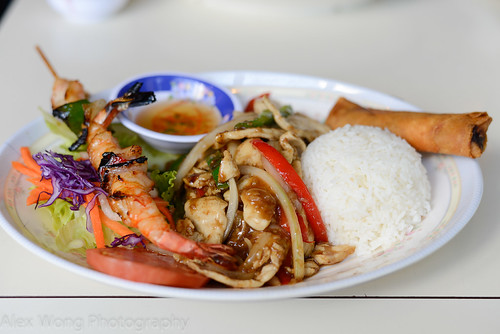
 

Vietnamese Lemongrass Chicken and Grilled shrimp

Not far from the Notre Dame is Chinatown located on the main Boulevard Saint Laurent. Many eating establishments in this area offer Vietnamese cuisine – some Vietnamese moved here due to their knowledge of French taught by their former colonialists. One simple eating establishment that we particularly enjoy is My Canh. My friend’s order of the Combo No. 1 (I’m always wary of anything combo) came with well-marinated grilled beef, chicken, grilled shrimp, along with Imperial roll, salad and rice, which he enjoyed tremendously. My order (Combo No. 2) was similar except mine consisted of lemongrass chicken filled with the root fragrance without being overwhelmed by it or too salty from fish sauce. The fish sauce dip to the tasty Imperial roll was the perfect balance of flavors. The opening clear pho soup was full of flavor and worth every sip. Note: only cash is accepted in this establishment.

My Canh on Urbanspoon

Pita with Brie, Dried Cranberries, & WalnutsSeafood in Beurre Blanc

Grilled Chicken in Mushroom SauceBistro 1272 is located in the gay-friendly part of town, Le Village, where the main Rue Sainte Catherine is closed to pedestrians decorated with overhanging pink balls in mid-air during the warm months. Bumping into some friends there, we decided to join them for dinner. After perusing the menu, I decided to go with the night’s special. The entrée was pita bread filled with flavorful Brie cheese (not the American pasteurized crap) paired with sweet dried cranberries and toasted walnuts, creating a tasty balancing act of flavors. The order of Grilled Chicken in Mushroom Sauce took this cut of poultry to a good place. Moist chicken slices are smothered with a rich and slightly woodsy brown sauce that made it worthwhile mopping up with some bread; the sides of Pommes Purée and vegetables were also well-executed. My friend’s order of Seafood in Beurre Blanc was a revelation for him. The pieces of shrimp, lobster, and scallop were bathed in a rich and flavorful shallot and lobster-infused butter sauce that made my friend effusive throughout his meal. You can find well-executed meals here at a very reasonable price, and it is worthwhile dining al fresco watching the pedestrians stroll by.

Montreal, CanadaAh, we can’t get enough of this charming city every time we visit it. Just when we thought we had calculated enough days for our trip, we always felt a few more would have made it perfect. With such great food, amiable friends and strangers, and wonderful street life and eating ambience, it is hard to press the stop button and come back to the daily grind. But such wonderful experiences only allow us to continue with our trying lives while looking forward to returning to this beautiful respite again and again. With such wonderful gastronomic offerings, Montreal seems to make that call continuously to us, louder each time. We’re coming back soon; don’t worry!

Malaysian Hawker/Street Food 1

During my recent trip back to Malaysia and reunion with my immediate family to celebrate my parents’ Golden Anniversary, we took this opportunity to catch up on foods that we cherished as we were growing up in that part of Southeast Asia.  I recently blogged about the wonderful dinners and banquets, whether Chinese or Peranakan/Nyonya, that we relished in while back there.  Equally delectable are the hawker or street foods that one finds on the streets or the informal coffee-shops that most locals patronize for their daily meals.  Hawker or Street food from this part of the world is renown and well-written about by gourmands and food writers.  Here is the run down of some of the dishes available.

The following dishes are usually served for breakfast:

Dim Sum

Dim Sum Man1) Dim Sum:  It was a change to see these Cantonese small bites being cooked and served roadside, and not in the restaurants, as it is served in the city.  These small dishes were equally tasty and full of variety, and the way Malaysians enjoy these bites is with some sweet Hoisin sauce and vinagery chili paste, very Southeast Asian.  It is a pity that such street-food tradition is quickly dying out in these fast times.

.

.

.

.

.

.

Char Tau Kueh

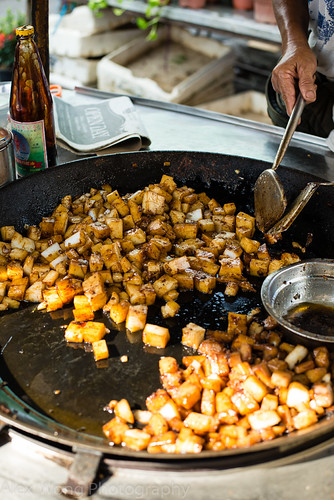
Char Tau Kueh Man2) Char Tau Kueh:  This is another common breakfast item usually found in markets during the morning time.  Rice cake squares are fried with some garlic, salt pickled vegetables, bean sprouts and eggs, seasoned with some light and dark soy.  My mother would frequently bring this back from the morning market, and we always enjoyed it with some sour chili sauce.

.

.

.

.

.

.

.

Rice Congee3) Rice Porridge/Congee:  This common Chinese breakfast staple is basically a rice gruel made with cuts of meat or seafood.  This reminds me of my maternal grandmother who would take me early in the morning to an alley in town to savor a version made with slivers of fresh fish and ginger.  Such a simple meal only needs a touch of soy sauce and some white pepper – nothing else.

.

.

.

.

.

.

.

Fish Ball Noodle Man4) Fish Ball Noodle:  Another mild tasting, but not short in flavor, breakfast item is this bowl of noodle soup.  Fine strands of rice noodles are paired with some minced fish meat balls, and moistened with a rich but clear fish stock.  A few salted vegetable pickles are usually added for some flavor.  A mild but satisfying start for the day.

.

.

.

.

.

.

.

.

Roti Chanai ManMurtabak

Roti Chanai5) Roti Chanai/Murtabak:  Most Malaysians do not live on mild dishes alone living in this part of the world infused with different culinary traditions.  Here we have a South Indian breakfast item of wheat flour dough stretched and layered with drops of ghee (clarified butter), much like puff pastry, before being cooked on the griddle.  The accompanying sauce is a fragrant and spicy sour curry (usually made with fish head) that adds all its flavors to the mild bread.  Another type is the stuffed version, Murtabak, as in this case made with minced meat, onions, and green beans.  An exciting and tasty start to the morning indeed.

.

.

.

.

Bah Kut Teh Noodles

6) Bah Kut Teh:  A Malaysian favorite is a pork stew consisting of ribs or pig feet cooked in a heady soup made with garlic, cinnamon, star-anise, licorice and lots of Chinese dried herbs.  This fragrant mixture is usually served with rice, but on this occasion, the meal came with some parboiled egg-noodles, adding a wonderful twist to this common staple usually served for breakfast or after a late-night out.

Fish Head Noodle Soup

7) Fish Head Noodles:  This noodle soup dish is similar to the fishball noodle soup, but in this case, pieces of fish head are served instead.  The bony bits add a stronger fish flavor to the broth, and Malaysians are very adapt in finding the flesh in between the bones and cartilage.  I must say that I quite enjoyed this dish despite not having eaten it much in the past – definitely not for the mild and meek breakfast taker.

The following dishes are usually served for lunch and dinner:

Rojak

Rojak Lady1) Rojak:  This is a refreshing start for lunch, a salad consisting of fresh Jicama/Bangkuang, bits of mango and cucumber, and some parboiled vegetables. But what ties the ingredients together is a thick sweet and salty sauce made with dark soy and savory shrimp paste.  A topping of nutty crushed peanuts seals the deal here – completely irresistible.

.

.

.

.

.

Poh Piah

Poh Piah Man2) Poh Piah:  This Peranakan/Nyonya  standard fare consists of thin rice crepes stuffed with cooked Jicama/Bangkuang, Chinese sausage, egg strips, crab meat, and some shrimp, seasoned with fried shallots, crispy pork lard, raw garlic, and some Hoisin and chili sauces.  This time-consuming dish is especially beloved by my family members since it was prepared by my grandmother often.  My auntie is always kind enough to invite us over for this meal every time we are back visiting, and we feel obliged to stuff ourselves silly with it.  This dish is to this day served and eaten in the port of Xiamen, Fujian, China, from which many Peranakan ancestors come from.  It was truly a rare sight to come across this Poh Piah crepe maker in public when walking around in Penang.

.

.

Ho Chien

Ho Chien Man3) Ho Chien: This small bite consists of tiny oysters cooked with a rice flour and egg mixture, much like an omelet, and served with a vinegary chili sauce.  Eating this dish always brings back memories of visiting my father’s hometown of Malacca, and relishing this dish by the seaside.  Just like the above dish, this dish is also commonplace in Hokkien communities in Thailand, Fujian and Taiwan.

.

.

.

.

.

.

.

Char Kueh Tio

Char Kueh Tio Lady4) Char Kueh Tio:  This Malaysian favorite can be found in nearly all coffee-shops or food courts in this part of the world.  Wide rice noodles are stir-fried with some shrimp, Chinese sausage, cockles, eggs, Chinese chives, and bean sprouts to produce a heavenly result that the Malaysians always seem to be on the hunt for the best version.  The traditional use of lard and crispy pork fat takes this dish to gastronomic heights.  Yumm!

.

.

.

.

.

.

Asam Laksa

Asam Laksa Man5) Asam Laksa:  This noodle dish hails from the Penang Peranakan culture.  Round rice noodles are bathed in a sweet and sour broth made fragrant from lemongrass, galangal, and turmeric, meaty with shredded mackerel, and sour from the use of tamarind.  The sprinkling of fresh pineapple, fresh cucumber, and fresh mint add the necessary refreshing elements to each slurp.  The spoonful of dark shrimp paste sauce is de rigueur as it adds another level of savoriness to the already superb broth.

.

.

.

.

.

Hainanese Chicken Rice

Hainenese Chicken Rice Man6) Hainanese Chicken Rice:  This chicken dish hails from the Hainan culture which is renowned for their superb cooks.  It is a simple dish but difficult to master as the cooked chicken still retains its collagen after a complex boiling process, producing a moist and silky-smooth meat.  The rice is cooked with the chicken fat and broth to give the simple grain lots of flavor.  A side of chicken broth is usually served along with some chili  sauce for the plain chicken pieces – a favorite of many Malaysians which we savored a number of times on this trip.

.

.

.

.

.

Nasi Kandar

Nasi Kandar Man7) Nasi Kandar:  This rice dish is served by the Mamak community, Indian Muslims.  Here we have rice made yellow and fragrant from lots of heady spices, served with any sides to the diner’s desire.  On my plate I chose some chili shrimp, fried fish, along with some okra, cabbage, and cucumber slices.  The variety of toppings to choose from can be mind-boggling, but the result is a tasty and satisfying rice dish.

.

.

.

.

.

.

.

Har Meen

8) Har Meen:  Penang is famous for this noodle soup dish, which was where I had this bowl.  Noodles are paired with a spicy and fragrant shrimp stock along with cooked shrimp, chicken, boiled eggs, and bits of vegetable.  What makes the dish sing is the quality of the stock made from shrimp shells, and this version was one of the best I have ever tasted, while sitting next to the beach for dinner – not a single drop of that tantalizing broth remained at the end.  The side of cooked chili paste adds some depth along with some more spice heat to the dish.

Wat Tan Hor Fun

9) Wat Tan Hor Fun:  This noodle dish is a Malaysian Cantonese staple.  Wide rice noodles are covered with a thick egg white sauce filled with bits of seafood and meat.  The slippery consistency of the dish is a texture that most in this part of the world enjoy with their noodles.  The side of pickled green chilies is typically served since Southeast Asian sensibilities search for spicy and sour elements to act as a foil to rich flavors, as is in the case with this dish.

Saté

10) Saté.  Most Westerners have probably tasted this Malay dish but not in its original version.  Here we have short skewers with small pieces of well-marinated meat on them, and charred on top of burning charcoal.  To keep them moist, they are occasionally doused with a mixture of coconut milk and oil with a crushed lemongrass as the basting brush.  The side peanut sauce is another element that can make the dish a hit.  The pieces of cut white onion and cucumber provide the refreshing relief to the rich flavors.

Sweet and Spicy Shrimp

11) Sweet and Spicy Shrimp:  Pieces of large unshelled shrimp are coated with thick sweet and spicy sauce before grilled until the shells are crispy and completely edible.  The side of crispy noodle with a bare sauce accentuates the crispy nature of the dish and making this seafood dish complete.

Here is a quick run down of foods and drinks to cool down with:

Fruit Man

1) Seasonal Fruits:  Without fail, you will come across a vendor selling fresh-cut seasonal fruits, as in this case, watermelon, papayas, bananas, and rambutans.

Sugarcane Juice Man2) Sugarcane Juice:  The sight of the sugarcane press is not evident in the city much these days but I was glad to come across this stall in Little India, Penang, and I could not resist getting a glass full of this sweet juice to cool down from the sweltering sun.

.

.

.

.

.

.

.

.

.

Malaysian Chicory Coffee/Barley Lime Drink3) Malaysian Coffee/Lime Barley Drink:  Malaysian are fond of their coffee, a unique roast of coffee beans with chicory in margarine to produce a rich but bitterless brew.  For something cooler, I usually order the chilled sweet barley drink with a few squeezes of lime.

.

.

.

.

.

.

.

.

Kalamansi Lime Juice4) Calamansi Lime Drink: Here we have a drink made from squeezing of the local Calamansi, a very tart citrus, much like Key Lime.  The addition of a salted plum adds more tartness to this refreshing concoction, as if it were not sour enough.

.

.

.

.

.

.

.

.

.

Nutmeg Juice5) Nutmeg Juice:  I had this drink in Penang which is known for its nutmeg plantations.  It is quite sweet with a tartness from the nutmeg oil found in the flesh.  It maybe too strong for some but I quite enjoyed it despite its astringent nature.

Whew.  Did we eat and drink all of these?  Yes, indeed, and we still couldn’t get enough of the dishes.  Such tempting and delectable wide-variety of offerings has only one single effect on the receiving end – a food-obsessed gastronome, which most Malaysians are.  We talk and think about food all the time, when and what is the next meal, and where to find the best rendition of these dishes, even when we are out of Southeast Asia.  Most of my non-Asian friends are perplexed by such obsession but once they have visited this part of the world, they start to get a slight inkling of said nature.  With the first dish, resistance becomes futile for the diner, and welcome to the club!

Peranakan/Nyonya Dinner 1

_6004614.jpgIn the last few blogs, I posted about traditional Chinese dinners and banquets, meals that exude a level of refinement and a level of cooking that is indicative of top-quality Far Eastern cuisine.  However, in this blog, I will be writing about a Peranakan or Nyonya meal that my family members and I enjoyed during our brief reunion in Malaysia, while on a side trip to the beautiful northern island of Penang.

Penang was part of the Straits Settlement, a trio of port-cities that were run by the British for a couple centuries beginning in the late 18th century.  One of the settlements is the port of Malacca, which my father hails from.  In all three ports, Singapore being the last, Chinese immigrants moved to this part of Southeast Asia for commercial opportunities beginning in the early 15th.  Before then, these men were transient and returned to China, but in time, Chinese traders decided to set up homes in the tropics and some married the local womenfolk, producing the germinal stage for the Peranakan or Baba/Nyonya culture.  At a certain point in history, China issued edicts that prohibited the movement of traders between the two countries, thus forcing them to claim these Southeast Asian ports as their home.  In my estimation, the Peranakan culture is probably the first hybrid cultures in the world, before the arrival of the Spaniards to the Americas and before the existence of the Mestizo culture.  In this posting, I will be describing dishes from my subculture, eaten at Ivy’s Place, located in Georgetown, Penang, while pointing out its differences to pure Chinese cuisine, and the various influences to the cuisine derived from a new Southeast Asian environment.

Loh Bak/Nyonya Meat Rolls

1) Lo Bak: Very few dishes in the cuisine qualify as appetizers but only one in particular can claim such reputation, Kueh Pie Tee (see blog).  However, Lo Bak is close to being called one since it is a light bite.  Soybean skin have been stuffed with a minced pork mixture, mixed with crunchy water chestnuts, and seasoned with aromatic 5-spice powder (cinnamon, coriander seed, star-anise, bay leaf, and allspice).  The side of sour chili sauce. a non-Chinese condiment, is the perfect accompaniment to these fragrant meaty bites.  This dish brought back memories of enjoying these tasty morsels in local coffee shops for breakfast or lunch.

Otak-Otak/Steamed Fish Cake2) Otak-Otak: This quintessential Nyonya dish is found in all Peranakan communities.  Minced Spanish Mackerel is mixed with rich coconut milk, aromatic root herbs like galangal, turmeric root, and lemongrass, and made fragrant with Kaffir lime leaves and turmeric leaves.  This mixture is spooned into fresh banana leaves and steamed until slightly firm.  Here we see the use of purely Southeast Asian ingredients and seasonings.  This concoction was a favorite of ours made by my paternal grandmother, and eating it was definitely a trip down gastronomic memory lane.  However, the kitchen ran out of these parcels and all we got was a small but delicious taste – what a pity.

.

.

.

Itek Tim/Sour Duck Soup3) Itek Tim:  This is one of the few clear soups found in a cuisine which tends to have heavier sauces instead.  Pieces of duck and Chinese Pickled Mustard Green have been boiled together to produce a slightly sour soup enriched by the strong-flavored poultry.  I remember this dish being served on auspicious days like marriages and Lunar New Year.  Unfortunately, this version was not as good as grandma’s (we compare dishes to the home version like Italians do) who used Tamarind slices to add more of a sour punch, a few chilis for some heat (Southeast Asian sensibility here), and a shot of brandy to counteract any strong fowl flavor (excuse the pun).  No doubt, the latter version was a hit in our household. Note:  Soups are not considered a separate course, thus it is savored continuously throughout the meal.

.

.

Inchi Kabin/Nyonya Fried Chicken

4) Inchi Kabin:  The peculiar name of this dish is perhaps derived when the cook in the ships would call the sailor or Captain (Encik/Inchi) from the cabin (Kabin) down for the meal when the chicken was ready.  It is basically a twice-fried chicken seasoned with mild aromatics and matched with a sauce that includes Worcestershire sauce.  Its mild nature and the use of the English seasoning are telltale signs that this dish is an adaptation for the Western palate, most likely British since they ran Penang island for a long period of time.

Ayam Kapitan/Nyonya Braised Chicken

5) Ayam Kapitan: This aromatic chicken stew is much milder than the local chicken curries, but not short in flavor.  The interesting name (Kapitan meaning Captain) and its mild flavor again points to locals modifying the nature of typical dishes to suit the taste needs of  Westerners that employed them in their households.  Many Peranakan men and women worked for the British in their offices or as part of the house staff.  This is more of a Penang Nyonya dish, thus a bit of a novelty for my family during the meal.

Sengkuang Goreng/Stif-fried Jicama

6) Sengkuang Goreng:  Here we have Jicama stir-fried with dried shrimps and Chinese mushrooms, seasoned with some light soy and darkened with some dark soy.  Jicama is indigenous to Mexico and it was brought to Southeast Asia by the Spanish conquistadores  when they arrived in the Philippine islands.  This northern dish was new for me, and I enjoyed savoring it as a wrap with lettuce leaves.

Asam Ikan/Hot and Sour Fish Stew

7) Asam Ikan:  It would be amiss to savor Peranakan cuisine without ordering this quintessential dish.  Fish steaks have been poached in a soup made aromatic from lemongrass and galangal, spicy from some chili, and sour from tamarind.  The topping of fresh mint and torch ginger flower (Bunga Kantan) adds a level of herbaceousness that makes this fish stew completely irresistible.  The pieces of fresh tomato added to the soup’s sour quality, and the al dente okra added some textural contrast.  This stew brought back memories of home dinners when it was served weekly during the 8 to 10 dish dinners that we grew up on.

Asam Udang/Tamarind Shrimp

8) Asam Udang:  Whole prawns have been marinated in tamarind paste and some sugar, providing a slightly sweet and sour element to the mild sweet shrimp meat.  Although I am used to the stewed version that we grew up on, I enjoyed this grilled version that made the shells crispy and completely edible.  Similar treatment to pork belly was also a favorite in our family meals while growing up.

Bubur Pulut Hitam/Purple Rice Pudding & Coconut Milk9) Bubur Pulut Hitam:  This rice pudding is made with purple glutinous rice cooked with Pandan leaf (“Asian Vanilla”) and topped with a tropical touch of salty coconut cream.  This was always a favorite of my family, and it was eaten both hot or cold at anytime of the day or night.  A great end to this meal.

The dishes in this meal represent the essence of the Peranakan culture pointing to the assimilation of Southeast Asian ingredients and seasonings with a Chinese taste palate.  This is evident from the use of coconut milk, tropical root aromatics like lemongrass, galangal, and turmeric,  the use of spicy chili peppers and sour tamarind, the use of herbs like mint, pandan leaf and torch ginger flower, the affinity for Jicama/Sengkuang (although originally from Mexico), and the balance of flavors mixing the sour, spicy, sweet, and salty.  Yes, this food is indeed very complex in its flavor profile and equally time-consuming in cooking and realizing the final product; I know this too well since I used to watch both my grandmothers prepare the all-important large dinners starting in the wee hours of the morning.  But this meal sitting was very rewarding on many levels, and we must have attacked the dishes like wandering gastronomes returning to something familiar and extremely soul-stirring.  Despite all the culinary wanderlust within, this meal was the much needed homecoming for me and my family members, food wise and location.  We just cannot get enough of this wonderful yet little-known cuisine.  Hopefully, you will get to try some of its dishes, and then you will understand.

Watch a brief video on Peranakan Culture.

Chinese Banquet 2

Chinese BanquetAs the continuation on a series on Chinese Meal and Banquets (see last two blogs), I will be writing about a Chinese Banquet that my parents and their family were invited to by a good friend of my father while we were back in Kuala Lumpur for my parents’ Golden Anniversary. Since I missed partaking in these kinds of dinners and such quality of cooking is frequently amiss outside of Asia, I did not pass up on this opportunity when inquiries were made about who wanted to join this meal gathering. Since my Australian nephew, mentioned in the last blog, was in attendance, it was an opportunity for me to reinforce what he had learned about the sequence of dishes in a Chinese Banquet.

.

.

.

.

Shrimp in Wasabi Sauce, Scallop Tempura, Chicken Mushroom Bao

Shrimp in Wasabi Sauce, Scallop Tempura, Chicken Mushroom Bao1) Appetizer: Three Seasons. Unlike my parents’ banquet, here we have a slightly abbreviated version of the usually served Four Season dish. On this occasion, we were served Shrimp and Melon with Wasabi Sauce (a Japanese influence here), Panko-breaded Scallops with Sweet and Sour Sauce (again more Japanese influence), and Chicken and Chinese Mushroom in Steamed Bun Cup. Here we see the chef’s creative streak in infusing some Japanese ingredients and technique, and updating the traditional steamed bun by making it into a cup. This is a study of contrasts in flavors, ingredients, and textures, as most banquet first-courses showcase in their platters.

.

.

.

.

Lobster and Birdnest Soup2) Soup: Lobster and Birds Nest Soup. As I mentioned in the last blog, usually Shark Fin Soup is served in banquets, but they have fallen out of favor with the current generation. As an alternative, here we were served this luscious soup made with rich lobster meat and expensive birds nest that has the same texture as shark fin. Again, the addition of Chinese black vinegar and Chinese mustard adds more taste interest to this thick soup.

.

.

.

.

.

.

Crispy Chicken and Chilled Pigs Trotters3) Protein 1: Roast Duck and Chilled Pigs Feet. Savory crispy skinned duck was paired with thin slices of deboned and poached pig feet. Again, we see a study of contrast of flavors, textures, and in this case, temperatures. I must say that the pigs feet tasted better than it sounds and I enjoyed its slightly gelatinous quality.

.

.

.

.

.

.

.

.

Tuna and Crispy Soybean Skin4) Protein 2: Tuna with Green beans and Crispy Tofu Skin. Pieces of tuna have been broiled with a thin sticky coating most likely made with some Miso paste judging by the color and taste. The crispy tofu skin was a good foil against the moist fish, along with the sweet al dente young green beans.

.

.

.

.

.

.

.

.

.

Abalone, Chinese Mushroom & Broccoli

Abalone, Chinese Mushroom, Broccoli.5) Vegetable/Tofu dish: Broccoli, Chinese Mushroom, and Abalone on Tofu. When this dish arrived, we marveled at its presentation as well as the amount of baby abalone, a pricey mollusk rarely served in banquets. These pieces of seafood have the texture of squid but exude a richer seafood flavor, and this rendition was perfectly cooked sitting on pieces of silky tofu stuffed with a flavorful shrimp meat paste – this was heavenly. The pieces of broccoli and Chinese mushrooms were equally well-cooked; however, they took a distant secondary role to the marvelous seafood.

.

.

.

.

.

Fried Rice

6) Rice/Noodle dish: Fried Rice. At this stage of a banquet, either starch is served. In the hierarchy of grains, rice takes the lower rung. Hence, this dish is a “throwaway” dish, meaning that the diner needs to fill-up with this grain before the last course. This version was well prepared but was not memorable since it was a completely mild dish. Some chefs have “exotified” this humble dish by adding dried baby white bait fish and other non-Chinese seasoning.

"Malay" Cake

Dried Longan and White Fungus in Syrup7) Dessert: “Malay” Steamed Cake & Longan, White Fungus, and Sea Coconut in Syrup. This moist steamed sponge cake is perhaps a Chinese creation a la Malay with layers interspersed with a layer of caramel, giving the cake a sweet interest. The side of sweet chilled soup was not too sweet with bits of slightly firm sea coconut, slightly bouncy white fungus, and fleshy longan fruit.

This blog ends the series on Chinese Meals and Banquets. I hope this gives one an idea of how the dishes are ordered in such meals in a logical fashion. Furthermore, I hope that the series has inspired the reader to look forward to partake in such a gastronomic delight when the opportunity arises. I wish these opportunities presented themselves to me monthly, but alas, such is life for this epicurean!

Chinese Banquet 1

50th Wedding Anniversary DinnerIn my last blog, I wrote about my family coming together from disparate parts of the world to meet up in Kuala Lumpur, Malaysia, in order to celebrate my parents’ 50th wedding anniversary. I described the delicious dishes of first Chinese dinner that we ate on the first night together. This type of dinners was always a gastronomic highlight for me, of which I find such quality cooking missing from my experiences outside of Asia. To continue with this series, I will describe a couple of formal Chinese banquets that we were ingratiated with during our brief trip.

The first banquet took place in celebration of my parents’ Golden Anniversary. Many relatives and friends were invited to partake in such a joyous occasion, and since some were Muslim, the meal was completely halal (Muslim kosher), thus no pork was served at all. However, such dietary restriction is never in the way of good creative Chinese cooking as in their banquets. Since my nephew from Australia was sitting next to me, it was a good opportunity to explain to him the logical sequence of dishes in a banquet, very much like the order of the Chinese dinner in the last blog.

Four Seasons Appetizer

1) Appetizer: Four Seasons. In a formal banquet, the meal starts with this kind of opener, unlike a dinner. This platter holds such a name as it is a dish with four different elements that distinguish themselves in texture, flavor, and ingredient. On this day, we were served a cold spicy papaya salad, crispy soybean skin stuffed with a fragrant lemongrass filling, crispy spring rolls coated with a sweet sauce, and chicken cooked with Chinese mushrooms.

Sharks Fin Soup

2) Soup: Shark Fin Soup. This soup is almost de rigueur in a big celebratory dinner, as was in this case. The thick soup comes with fine strands of shark fin that has been cooked until it is tender. Although it has not much in terms of flavor, a good stock gives it character and body. Furthermore, a customary splash of Chinese black vinegar and English mustard (a new local trend for me) gives it some more flavor interest – this soup is a favorite of my mother. Unfortunately, this dish has fallen out of favor for many due to its unsustainable ecological practices.

Steamed Pomfret Fish

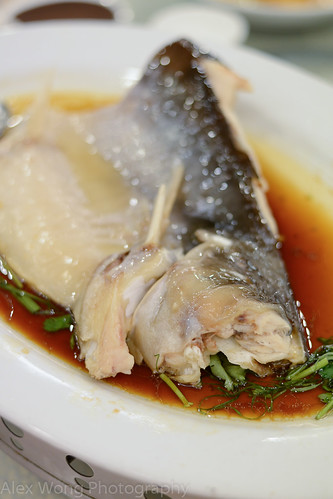
3) Protein 1: Steamed Pomfret Fish. Like the Chinese dinners, the fish is simply cooked, steamed as in this case, and paired with a light soy sauce. The diner is always looking for a fresh sweet quality from the flesh, not covered by too much or too heavy of a sauce. The fish that arrived on the table was really huge, more than enough to serve 10 guests per table.

Crispy Chicken and Shrimp Crackers

4) Protein 2: Roasted Chicken. Since the meal was halal, poultry was the obvious alternative (never beef or lamb since many Chinese find their flavors too strong for their palate). Here the meat was well-seasoned and the skin made crisp in the oven, which can be dipped in a white pepper/salt combination for more seasoning. The clouds of Shrimp Crackers are equally tasty echoing the crispy nature of the dish.

Lotus Root and Sweet Peppers

5) Vegetable/Tofu Dish: Sautéed Lotus Roots with Sweet Peppers. This was a new dish for me. Slices of fresh lotus roots have been stir-fried with sweet peppers in a light sauce. I have had this root in mostly soup dishes, but I quite enjoyed its slight crunchy texture with equally crunchy sweet peppers.

Longevity Noodles with Roasted Chicken and Chinese Mushroom

6) Noodle/Rice Dish: Longevity Noodles. This dish is a must-order in such celebrations as my parents’ anniversary. Here the noodles are paired with roasted chicken, Chinese chives, bean sprouts, and Chinese mushrooms, brought together by a light sauce. It is imperative that server does not cut into the noodles to ensure the intention of wishing the celebrants longevity in their marriage and lives together.

Sweet Lotus Seed PancakeLongan in Syrup

7) Dessert: Longan in Syrup and Lotus Seed Pancakes. This is one of my favorite banquet desserts. Fresh longan fruit has been cooked in light syrup, paired with a hot pancake with filling made from mashed lotus seeds, a divergence from the traditional use of black bean paste. In the past, this pancake was served with a hot sweet peanut soup, which I enjoyed very much. However, this was equally satisfying for its light quality, especially after so many courses.

In the next blog, I will be writing about another Chinese banquet. I hope this posting is giving you an idea what a Chinese formal entails, and how much I miss such delicious delights being away from my childhood home.

Chinese Dinner 1

Recently, members of my family and their spouses and children travelled long distances to meet up in the country which we were grew up in. The purpose of such reunion was for our parents who had been planning to come back to mark their Golden Anniversary with the renewal of their vows in the church where they first exchanged them 50 years ago, and to invite all their respective relatives to a big dinner that night. On the first night of the reunion, the whole gang of 16 decided to have a Chinese dinner in a reputable restaurant not too far from the hotel where we were staying at.

Many of you have read that I have hesitated for the longest to write a blog on Chinese food in the DC restaurant scene. This stems from the fact that I have been spoiled by quality Chinese food either in the restaurants, hawker stalls, or at home as I was growing up in that part of the world. When I would come back to Kuala Lumpur to visit my parents before their migration abroad, I looked forward to the home cooking and to our meals at high-end eating establishments that were always a epicurean highlight for me as I was growing up. Here is one such meal, albeit not quite a banquet, but a quality Chinese dinner.

Chinese BBQ Pork

First Course: Protein – Chinese Barbeque Pork. Customarily, in a regular dinner, there are no appetizers. This rendition comprised of small slabs of pork belly, mostly likely a suckling pig, that has been roasted and basted with a molasses-like sweet and salty sauce. This is my father’s favorite dish, and it is usually not amiss among the other orders.

Roast Duck

Second Course: Another protein – Roast Duck. The restaurant does a wonderful version here. The meat was still moist yet flavorful with the skin completely rendered of its fat and quite crispy. The flavor was less “gamey” than the ones I have tasted in other countries – this dish would win over the not-so-aficionado of this bird meat.

Steamed Sai Kap Fish

Third Course: Seafood. The Chinese prefer to have their seafood cooked simply in order to showcase the freshness and sweetness of the protein. Here a Wild Patin fish has been steamed with some rice wine and ginger juice before lightly covered with a light soy sauce mixture along with some green onion garnish. The flesh was indeed moist and sweet, however, the price of this dish was a bit of a sticker shock – Asians never ask the price before hand. However, it was a worthwhile order for the quality ingredient and cooking. I was just a bit dismayed that they had chopped off the fish’s head, to which the diner would find it a bit suspicious (Asians prefer to see the whole animal/fish intact).

Tofu and Vegetables

Fourth Course: Tofu Dish. Here, pillows of this soybean cake have been fried lightly to give it texture and body, and they are braised along with some Chinese vegetable resembling a large zucchini in a savory sauce.

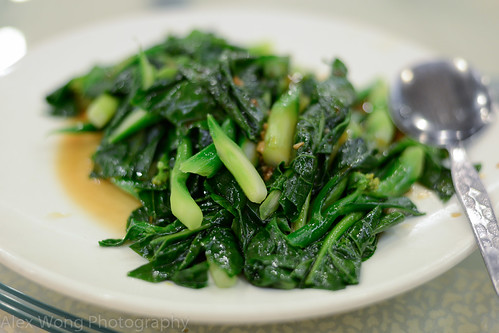
Chinese Broccoli/Gai Lan

Fifth Course: Vegetable Dish – Chinese Broccoli/Gai Lan. The vegetable has been quickly parboiled and paired with mild sauces like soy sauce or oyster sauce. With this vegetable, it is important not to cook it too long so that the sweetness is retained along with the crunch of the stems. Like the seafood, mildness of flavor and freshness of ingredient are qualities sought after here.

Crispy Noodles with Freshwater Prawns

Sixth Course: Noodle or Rice Dish. Customarily, a noodle or rice dish served in a banquet is considered more or less a “throw away” dish, meaning, if you are still hungry, you better fill up with this dish. However, in a Chinese regular dinner, it is a bit more purposeful, and in this case, we ordered something that we missed very much – Sang Ha Meen.  Crispy bits of egg noodle have been paired by large freshwater prawns in a thick eggy sauce spiked with lots of ginger and green onion. It is favorite among my family members, but it took the restaurant so long to serve it and we waited very impatiently. But once the dish arrived, we attacked and ate it with muted hungry mouths.

Dessert: Since we had waited for a long time for the last dish and we had young toddlers in the group, we opted to skip this course. Usually, fresh fruits or fruit cocktail would be on the order.

In the next couple of blogs, I will write about the Chinese Banquet Meals that I managed to savor on this trip.   Hope this blog builds up an appetite for what is to come.

English Eats

London SightsI recently returned from a week trip to London which gave me the opportunity to catch up with friends and relatives who reside in that part of the world. It also gave me the chance to catch up with some English eats, food that I grew up on during my high school days in a British all-boys boarding school. Most of us would turn our noses up when mentioning this Continental cuisine, and my classmates and I did stage a food strike in school, the only one in its history as a school (it has closed down not too long ago). However, there is a lot to redeem itself from such maligned status, and I indulged in some typical English food which most would take for granted. This was my culinary journey.

Fish, Chips, & Mashed PeasOne single dish that definitely comes to mind when mentioning British food is Fish and Chips which I longed for during my visit. On a day trip to the enormous British Museum, I asked a London Underground employee where I could get some decent lunch. I knew he would lead me to a proper shop liken to  asking a cop where to find some fresh donuts. Entering the shop, it was quite empty since it was still quite early for lunch at it was sweltering outside and inside (most establishments do not have AC). The cook assured me that he was going to make me a fresh batch of fried fish when I placed my order. The plate arrived with some lightly battered moist Cod accompanied with some chips (fries) and my perennial English favorite, Mashed Peas, which conjure up some vile thoughts among most Americans. The fresh tasting house tartar sauce was the perfect partner to the mild fish which was packed with fresh dill. The chips were proper and a heavy dousing of malt vinegar (a must!) hit the right spot for me. As for the mashed peas, I couldn’t get enough of it. This is definitely a must-have for those visiting across the waters. Just don’t be surprised that an immigrant is running the shop, as was the Albanian for my lunch. If you happen to be around the British Museum, check out Alen’s Fish & Chips.

English Pies

Steak and Kidney Pie (and other stuff)For one of my lunches, I met up with an Aussie-Malaysian that has become an expat in this metropolis for the last year. Although we were still struggling with the heat, or the lack of cool places, we elected for a pie shop.  Pieminister has one of their branches located in Farringdon, the heart of London’s Business District.  Looking at the array of pies, I picked something I ate during a rugby trip more than 30 years ago – Steak and Kidney.  Each order of pie came siting on a mound of mashed potato, topped with cheese curds, mashed peas and fried onions, swimming in a pool of savory sauce in a retro enameled metal plate.  The pie was exactly what I expected, meaty with melting chunks of beef, a bit bitter from the organ meat, and savory from the rich thick gravy inside.  The other sides were decent, but they brought this simple dish a bit over the top, especially in this heat.  It would have been the right dish in the cold winter but I had to get this fix in on this trip.

English Sandwiches

Well, something lighter and more digestible for the summer heat is an English Sandwich.  Yes, the simple bread and filling concoction that would make most roll their eyes.  Well, the English are famous for making fantastic combinations of this light meal that are easily available everywhere during these hot months from the Public Houses (aka Pubs) to the grocery stores.  A visit to a pub for a lighter fare after the monstrous pie meal was rewarded by a menu featuring some sandwiches.  My order came with slices of hearty country white bread (not the spongy Wonderbread crap) filled with some quality Wiltshire ham, with a clean and barely salty flavor, and slices of ripe tomato.  But what makes the sandwich British is the slathering of pungent British mustard that is biting enough to clear the sinuses.  Other favorite combinations that I have savored in the past are the classic Buttered Cucumber Sandwich and the Cheese and Chutney version.  Try these different light bites when visiting the Isles in the warmer months.

Tea ServersWhat’s is the next meal after lunch around these areas?  No, it is not dinner but tea.  When it was a bit cooler, my cousin treated me with some of her baking and she made some Scones for teatime.  Round pillows of short and buttery dough have been baked with a firm outer crust but soft and light when split open.  My cousin noted that the secret to making scrumptious ones is the use of a nutmeg in the mix.  To top of this pastry, she added some clotted cream, much like a thick whipped cream akin to mascarpone cream, but more of a buttery flavor.  To sweeten the deal, a huge dollop of fruity jam topped it off.  A good cuppa (cup of tea), stronger than the American version, with a touch of milk makes the perfect drink to go with these tasty bites.  Sorry, but I forgot to take a photo of the scones, but in lieu, I am posting a photo of some tea servers I came across at the British Museum.

.

.

Peking Duck and GarnishesChinese Roast and BBQ Pork

Peking Duck PancakeOn my last night, I met up with a former classmate that attended boarding school with me 30 years ago.  He and his girlfriend met me up at the tourist-packed Piccadilly Square, and we walked to Chinatown looking for some quality Chinese food that it is known for.  Looking at a throng of people waiting outside its doors, we decided to chance it and walk into Four Seasons on the busy Gerard Street.  For our appetizer, we ordered the Peking Duck – the meat was flavorful and the lacquered skin, the most important part, well rendered and quite crispy, making the wraps delectable and irresistible.  For the mains, part of the meal was a combination of Chinese Roast Pork and BBQ Pork. My friend and his gal were constantly reaching for this dish during the meal mainly due to the skillful seasoning and cooking of these cuts of meat.  The BBQ version was glazed with a sweet and savory sauce, and the Roast Pork pieces were slightly salty and made crispy from perfectly cooked and crunchy crackling.  The pool of addition sauce under the meaty mound was scooped up and poured over our bowls of rice until its last drop.  These fine dishes took me back to my youthful trips to London in hunt for excellent Chinese food as a relief from the trying boarding school fare that were served (hint – hunger strike).

Cheese and Crackers with PiccalillyWhat comes after the mains around here?  No, not necessarily sweet desserts but a Cheese Plate.  A visit back to my high school brought back lots of memories, from the train station and little village that has not changed in 30 years, to the ride up the hill that I used to trek up with my luggage, to the school that housed a lot of my memories of my early teen years, and the wonderful monks who still remembered me after countless of students that walked through its hallways.  One memory was having a Cheese Plate on special feast days for our lunches.  Different cheeses were usually served with Cream Crackers and a vegetable pickle called Piccalilly, something that I had not touched in 30 years but was resuscitated in my memory bank on this trip.  Somehow, I always manage to fit in a few slices of Stilton, Aged Cheddar, and Brie before dessert.

.


English Trifle

Summer PuddingFor the pudding or dessert lover, ok, here are a couple of them.  The first is Trifle, a mixture of cut fruit, whipped cream and pastry cream or thick custard.   This is a  combination of the freshness of seasonal fruit, sweetness of the custard, and the richness of the cream, all brought together in one single bite.  Not the most beautiful looking dessert but it is indeed satisfying.  Another sweet ending at this time of the year is Summer Pudding, consisting of white bread that has been soaked by the juices from a compote of different berries.  The bread will have taken the sweetness of the berry juices, holding together the fruit bits that can be topped with some sweetened whip cream or yogurt.  You can get good renditions of these desserts in the local supermarkets if you are too bothered to make them.

.

.

Hard CiderWalking around London, I noticed people hanging around outside of pubs while holding a pint of their favorite beverage, trying to stay cool from the uncomfortable heat.  On my few visits for a cool down, I ordered some Hard Cider, a drink that is not easily found on this end of the Atlantic Ocean.  The American version of cider is a dealkalized version of the UK drink, much like unfiltered apple juice. But the Continental version has a bit of alcohol punch and it is served very cold, much to my relief on those warm days.  These days, these apple brews come infused with different fruit flavors which I found revelatory on this trip.  If cider is not your cup of tea, there is always the myriad of beers and ales that would satisfy the thirsty traveler.

My return to the UK was definitely a nostalgic journey, from visiting my old High School, to getting reacquainted with old friends, relatives, and teachers, and to catch up on some British foods that I grew to love. Yes, the food scene has changed considerably in the last 3o years, and various international influences have made roadways into the local eats. So, when you are in this part of the world, discard what you have heard about English eats, and be open-minded to some wonderful culinary creations that can even surprise anyone – you may find a favorite among the many dishes.

Le Channel

During my recent visit to London, I stayed with my cousin who used to take care of my siblings and me when we had little weekend breaks during the school year in boarding school.   She would spoil us with her wonderful cooking, from French crepes for breakfast to aromatic Malaysian curries for dinner, interspersed by a trip to a good Chinese restaurant.  She is equally an avid foodie like I am, and our meeting-ups are filled with conversations constantly revolving around the topic of gastronomy, to which her sons are perplexed about.  So, on this last trip to the UK, she asked me to reserve a day to make a day-trip to Calais, France.

Le Channel, Calais, France

Le Channel, Calais, FranceHaving driven with her and another couple for an hour-and-a-half to the white cliffs of Dover, we took a ferry that transported us smoothly across the English Channel sailing for around an hour (Hovercrafts are just too choppy of a ride, albeit faster).  After getting off the boat, we immediately used GPS to search for Le Channel, a Michelin-worthy restaurant hugging the French coast not far away from the port that we disembarked from.  Since we had arrived earlier than our reservation time, we walked around parts of the city while our anticipation for fine French cuisine was stirring in our minds and the increasingly hungry bellies.  At 12:30 p.m., the time of our reservation, we walked into the restaurant and took our seats by the expansive window.  I will write this review starting with the photos and the food description of the various diners’ dishes, followed by the review.

Le Channel, Calais, France
Amuse Bouche: Cantaloupe, Iberian Ham, Shrimp, and Russian Vegetable Salad.

Le Channel, Calais, France
First Course 1: Fruits de Mer – Crab, Shrimp, Scampi, Welts, Oysters, and Brown Shrimp.

Le Channel, Calais, France
First Course 2: Foie Gras with Black Salt and Armagnac, Eggplant and Buffalo Mozzarella Caviar, Tender Artichoke Hearts, Yellow Tomato Gelee, Brioche and Cooked Vegetables.

Le Channel, Calais, France
Second Course 1: Oven Roasted Red Mullet Fillet, Basque Red Pepper Sauce, Fried White Onions.

Le Channel, Calais, France
Second Course 2: Salted Cod Brandade, Sea Bass Beignets, Fresh Peas, Creamed Emulsion of Cooking Juices.

Le Channel, Calais, France
Second Course 3: Skillet Steak with Raw Butter, Smoked Eggplant Rounds, Parmesan Cone with Mushrooms, Avocado Sauce.

Le Channel, Calais, France
Second Course 4: Sole Murniere, Seasonal Vegetables.

Le Channel, Calais, France
Cheese and Dried Fruit Plate – the waiter’s recommendation of three of the strongest cheeses in the house.

Le Channel, Calais, France

Chariot de Dessert: Mille Feuille, Opera, Multi Fruits, Paris Brest, Iles Flottantes, French Trifles, Mousse de Chocolat, Mousse de Café.
Le Channel, Calais, France
Dessert Plate: Multi Fruits, Iles Flottantes, French Trifle.

As the saying goes, “A picture speaks a thousand words” or in this case, many photos. Looking at them, they represent what the true experience was about: top-quality fresh ingredients as in the huge starter of Fruits de Mer, exceptional cooking, creative pairing of ingredients as in the Avocado Sauce and Smoked Eggplant with the Steak, well-seasoned components as in the  heavenly Potatoes cooked in stock with my Sole Murniere and the Basque Red Pepper Sauce with the Red Mullet, the eye-opening variety in the menu with the incredible array of Desserts and Cheeses, and the incredible value for this to-die-for meal at this high fine dining level (31 Euros and 39 Euros).  The décor was impeccable yet not intimidating, service was efficient and a bit cheeky at times, and the ambience conducive to truly enjoying the experience and savoring the delectable dishes without being pressured or rushed – we took 3 hours (aren’t we supposed to, anyway?).  All the diners at my table were constantly effusive about their own selections with the exception of a couple who found some of the cheeses way too strong in smell and flavor to be palatable.  I enjoyed every crumble of strong cheese that I would not get to taste in the US due to pasteurization laws, and the dried fig and apricot were the perfect foil and palate relief to the assertive dairy.

Calais, FranceHaving lunch at Le Channel was truly a highlight for me and I am thankful to my cousin for organizing this wonderful gastronomic trip.  Interestingly, we all walked away from the table well-sated on my levels, yet we were not waddling out of there despite the quantity of food we had ingested.  I tagged along my cousin to the local Hypermarket where she stocked up on all the local produce to bring back to her home in London.  Walking around, I couldn’t help but marvel at the quality and variety of ingredients that inspire the French to appreciate good cooking and make food an integral part of their culture.  A simple meal on the trip back of French Baquette, Mushroom-scented Brie, and French Ham was a good end to this marvelous trip that is well-imbedded in this reviewer’s mind, and it will be replayed over and over again until the grove is worn down.

Aroy Thai


Aroy ThaiWith quite a few blogs on Thai cuisine on my site, it is hard to justify writing another one on this Southeast Asian cuisine.  However, when I heard that there was a new restaurant not far from my neighborhood serving this Asian cuisine, I knew I had to check it out after getting over my initial surprise  (“What? In Prince George’s county?”)  Reading my previous blog on another Thai establishment (see blog), you sense my frustration that my county is not as “blessed” as the neighboring ones when it comes to international cuisine, especially Thai.  Furthermore, it is located in the heart of College Park, MD  (aka Party Town) which is known for mediocre cheap eats,  drinking holes, and rambunctious fraternities – I graduated from there more than 20 years ago, so I know.  With these thoughts in mind, I knew I had to check this new place out and see whether the positive online reviews (100% on one site) were written by reviewers in a sober state.

Located just off the main drag Route 1,  Aroy is squeezed into a narrow building in a short block lined with metered parking on both sides of the street. The window is displayed with plastic rendition of their dishes that brings to mind Japanese sushi models popular in the 90’s.  Walking into the narrow building, you notice that it is a small 7-table establishment with a counter separating the dining room from the kitchen.  The bright orange walls and the long wood banquette makes the place welcoming and warm.  Having a lifetime experience with this cuisine since I was a child, I recognized many dishes on the menu and I decided to check-out their offerings by ordering some standard dishes.
Vegetarian Spring Rolls
Tom Yum GaiAs part of their lunch menu, the main dishes come with Thai Spring Rolls or Tom Yum Chicken Soup.  I must say I did not expect much from these appetizers since they were part of the lunch deal, but I was proven wrong.  The spring rolls were crispy and nearly greaseless, light from the thin wrapper, and delicious from a filling made with bean thread noodle, fine cabbage, and a surprisingly flavorful ingredient, oaky shiitake mushrooms, which elevated these bites to another level beyond its pedestrian flavor.  The soup was unexpected for me also.  Instead of an insipid sip, it was flavor packed with aromatics like lemongrass, and balanced with enough chili heat, lime tartness, fish sauce saltiness, and sweet from a pinch of sugar.  The bowl had a fair amount of mushrooms, tomatoes, and slivers of chicken breast to make it quite satisfying.  A good start to the meal, indeed.

.

.

Larb Gai/Spicy Chicken Salad

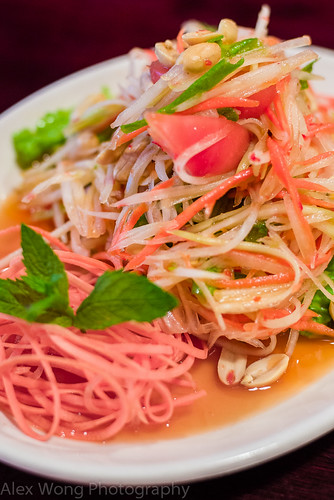
Green Papaya Salad/Som TumOn a couple of occasions, I decided to try out their traditional salads.  The first was Larb Gai.  Pieces of minced chicken are paired with sweet onions, roasted chili powder, toasted rice powder, and moistened with lime juice, fish sauce, and a hint of sugar.  This was a delicious spicy salad with the chili powder and rice powder adding a level of smokiness and heat to the sour, salty and sweet flavors of this warm bite.  If it weren’t for a couple of sinewy pieces of chicken, this would have been flawless.  The other salad was Som Tum, or Green Papaya Salad.  Thin julienned strands of the young fruit are paired with carrot, tomato, and green beans, flavored by a sauce made of fish sauce, lime juice, and fresh chilies.  What I enjoyed about the dish is the freshness of the ingredients and the balance of the bold flavors as well as the assertive spice heat – the kitchen is not holding back here.  The whole peanuts in the dish added a rich nuttiness that balanced out some of the acidity in the dish.  This was refreshing for me despite the fieriness of the chili heat – definitely, very close to Ped (Thai chili hot).

Sate Chicken

Another appetizer that is a good litmus test of a Thai kitchen is its rendition of Sate Chicken.  This restaurant’s version was out of the ordinary and it definitely wowed me.  Unlike many versions that I have eaten before, here the pieces of chicken were well marinated in turmeric and root aromatics like galangal making each moist piece full of flavor and aromatic, enough to stand by itself.  The accompanying sauce was also revelatory.  Most restaurants serve a bland version made with peanut butter but here, I tasted a version made with crushed peanuts, root aromatics, palm sugar as the sweetener, and tamarind juice as the sour element, an authentic sauce that I have tasted on the other side of the world.  The toasted pieces of bread were the perfect vehicle to mop up the sauce to its last drop.  The bowl of sweet pickles was probably a bit too fresh and they could have done with a longer pickling.  But that was very minor compared to the main players of this opening dish.  Yummm!

Pad See YuPad Kee Mao/Drunken Noodles

Noodle dishes seem to be calling my name every time I visit a Thai restaurant and I had to sample their offerings.  A friend’s order of Pad See Euw was his lunch on one occasion.  The wide pieces of rice noodles were slightly bouncy fresh and adequately sauced without being drowned by it, tasting savory from Thai soy and quite sweet that made each bite irresistible.  The crunchy broccoli, moist chicken slices, and wispy clouds of egg added the necessary tasty elements to the dish, which made this version pleasurable for my friend.  My order of Pad Kee Mao, or Drunken Noodle, was totally up my alley.  The wide noodles were fresh and not oily, adequately covered by a savory sauce (which remains a secret enigma to me to this day), mixed with slightly crunchy sweet peppers and onion strips, fragrant fresh purple basil, biting fresh bird chilies, moist meat, and pieces of sweet tomato.  This was an damn good version of my favorite Thai noodle dish, and it hit the right spots for me.

Thai Shrimp Fried Rice

Very few fried rice dishes impress me these days but my friend’s order here was something else.  The fresh tasting rice was cooked with bits of slightly crunchy carrot bits, sweet white onions, juicy tomato, topped with perfectly cooked shrimp, pungent green onions, bits of scrambled eggs, and served with fresh cucumber slices.  But what ties these disparate elements together is the flavoring added to the mixture, made from Thai soy sauce, containing a je-ne-sai-quoi added to regular soy, and a hint of fish sauce.  Despite being engrossed in my delicious noodle dish I couldn’t help but spoon from his rice place and enjoy the flavor profile of this dish.  When it is done right, this dish sings in the mouth, and it did in this case.

Green CurryRed Curry

No meal in a Thai restaurant would be complete without ordering a curry dish, or a couple of them.  On one visit, I ordered the Green Curry.  My bowl arrived with lean pork, Thai eggplant, bamboo shoots, sweet peppers, and purple basil.  Being a curry dish, the main player is the curry sauce, and this version was outstanding for me.  It had a slight peppery quality with a vegetal green chili fragrance, made more aromatic with root herbs and the basil.  But the cooking of the curry paste with fresh tasting coconut milk resulted in a well amalgamated mixture that stands out from other versions.  It was slightly sweet which points to the Thai sensibility for this seasoning as integral to the authentic palate.  Another visit’s order of the Red Curry was equally superb with the same ingredients as the above dish with exception of the curry paste.  The sauce was a bit more fiery with the use of red chilies in the paste with a darker leaf aroma from the use of Kaffir lime leaf – the evidence of a soften leaf points to adequate cooking to render all its flavor into the sauce.  I was again impressed by the skillful cooking that gave the curry a magical quality that I have not experienced often with this dish.

Mango and Sticky Rice

Fried Bananas with HoneyAlthough the sweet offerings here are sparse, I had to give them a try since they were some of my favorites.  The Fried Bananas came as mini spring rolls stuffed with pieces of banana, and topped with some honey and toasted sesame seeds.  The dough was fried crispy and nearly greaseless, encasing a filling of soft sweet banana, made even sweeter by the honey and fragrant from the sesame seeds.  An order of Mango and Sticky Rice was a special on another visit.  After getting a confirmation from the cook that the mangoes were prime and sweet, I received a plate with pieces in such heavenly state.  The side of sticky glutinous rice topped with coconut cream was an equal partner to the ripe fruit.  It had enough saltiness to match the sweet fruit and rich from some quality coconut crème made nutty from a topping of fried mung beans, an addition that wavers from the usual sesame seeds.  What impressed me the most of this dish was the rice, which was perfectly cooked and matched in seasoning and creaminess.  I know how tricky it is to cook this grain well, and that is why most restaurants can’t get it right.  However, this is the best rendition (yes!) of this dessert I have ever tasted, and its delicious ghost aftertaste still haunts my taste buds.

Something good is going on here, especially in that small kitchen: woodsy shiitake mushrooms in perfectly wrapped spring rolls, well-seasoned Tom Yum soup, fiery and smoky chicken salad, spicy and nutty papaya salad, the well-marinated Sate chicken and irresistible sauce, perfectly seasoned noodles with barely a trace of oil,  savory fried rice that puts all others to shame, curries with an aromatic sauce perfectly balanced with quality coconut milk and paired with fragrant jasmine rice, the best sticky rice ever tasted along with sweet ripe mangoes, and sweet soft bananas encased in sticky crispy dough.  Looking at the photos that I took, you see an undivided attention given to each dish even in the simple garnishes on the plate.  In Korean, this is called “hand flavor” which is indescribable but only can be felt or tasted.  Well, this place sure has it, and when I am this inspired, I want to get a glimpse of Mrs. Chef in the kitchen.  One day I hope to personally thank her for such skillful cooking.  This place is most definitely Aroy! (Tasty!)

Aroy on Urbanspoon

Mannequin Pis

Mannequin PisIt has been a year since I paid a visit to a Belgian eatery in the Palisades neighborhood that served decent food, but, however, it left me uninspired to write a blog about their offerings. As I was about to scratch this cuisine off my to-eat-list, someone mentioned to me about another restaurant in the Maryland suburbs way up north of town which he raved about for its dishes and he insisted that I paid it a visit.

Mannequin Pis is located in the northern suburb of Olney, about 30 minutes north in Montgomery County, in a short nondescript strip mall that does not quite inspire much hope for fine dining. Located behind a larger strip mall and sandwiched other establishments serving fast and cheap eats, the establishment stands out with its patio furniture and the heavily decorated window front plastered with numerous dining awards. However, it is easily missed from the main road, but GPS is one’s best friend in this circumstance.

French Baguette and ButterWith an online coupon in hand that spurred me to make a spontaneous visit, I walked in on a rather late hour on a quiet Monday night, hoping to avoid a large crowd (no walk-ins on the weekends) and to get a choice seat to take some decent photos for the blog. The place was only filled with a handful of people with French/Belgian music piping in the background. The dining room exudes some character with neatly set white paper and clothed tables filling the room without being packed like sardines. Upon taking my seat, I was served some fresh slices of baguette and butter. The quality of bread signaled what was to come for the rest of the evening. It was crusty and crunchy on the outside while spongy and light on the inside, exuding a homely baked aroma and tasting slightly sour from proper fermentation. This simple gesture was indicative of the attentiveness of this establishment, and anticipation was already stirring up in me.

.

Mussels Saffron Soup

Perusing the menu, I was not sure where to start for an appetizer. Fortunately with the knowledgeable assistance of my Francophone waiter, he suggested that I order the Mussel Saffron Soup. When it arrived, I marveled at the bowl and its ingredients. A pool of deep yellow soup arrived brimming with whole mussels topped with some chopped tomato, chives, leeks, and the unmistakable strands of saffron. But it was the flavor profile of the soup that really impressed me the most: the soup was slightly floral from the saffron threads, savory from a good seafood stock, made rich from the use of crème fraiche, and slightly tangy from a hint of cider vinegar (my suspicion was confirmed by my waiter). The mussels were plump and slightly briny, cooked to perfection while maintaining its fresh quality and plumpness without any granular texture (a telltale sign of inferior quality or overcooking). With this delicious soup being surprisingly light and so flavorful, I could not put my spoon down until every drop had been ingested and all the mussels consumed. It did not matter that summer has already arrived and this was a creamy soup – this could be a year-round order in my books.

Wild Boar Sausage with White Wine Sauerkraut

Recalling my previous experience in the other Belgian restaurant, it appears that one of the strong suits of this European cuisine is the sausages, and this restaurant offers a wide variety of these meaty morsels. Although my waiter recommended the Merguez sausage (made with spicy Moroccan lamb), I elected for something closer to its home and flavor – Wild Boar. The encased pressed meat arrived grilled, judging by the burnt marks, perched on a bed of White Wine braised Sauerkraut. Biting in the meat, I detected its mild gaminess paired with a tinge of sweetness and clove aroma, studded with pieces of moist sweet raisins. What I liked about this bite was the freshness of the meat, the unique flavors of wild boar, and the gentle seasonings that elevated the meat mixture beyond its humble state. The pickled cabbage under was the perfect foil for the slightly rich meat flavors with its sour elements made complex with the slightly fruity wine notes and some salty smoked bacon goodness imparted into the pickle. This was definitely a good pairing for this tasty sausage.

Moules FritesIt would be amiss to take a trip to a Belgian restaurant without ordering what this Continental cuisine is known for – Mussels. I chose my mollusks paired with a weird sounding sauce – Snob. A mini cauldron pot arrived with a kilo load (more than 2 pounds) of the seafood, piping hot with the sauce made with celery, onions, leeks, lobster bisque, garlic and brandy. The liquid was rather rich and packed with flavor, made aromatic from the use of fresh thyme and fresh bay leaves (milder than the dry version) imparting their slight mint-woodsy and faint eucalyptus-like oils. The mussels were as fresh they come – plump, briny, juicy, and not granular which is indicative of their freshness and proper cooking. The side of Frites was decent and proper, served the continental way with a tangy mayonnaise as the dip. For the seafood lover, especially mussels, this is a must-order with a wide choice of 17 tasty sauces to delight each bite and the individual’s taste.

Chocolate Terrine with Raspberry Coulis

Just when I thought I was sated from the delectable offerings, I was tempted by my waiter to look at the dessert menu. He suggested that I order Chocolate Terrine and I took it up on his advice. My plate arrived beautifully decorated with two thick slices of the terrine sitting on a zigzag pool of raspberry coulis. The chocolate wedges hit the right spot for this chocoholic – it was made with good quality Belgian dark chocolate (I was shown the 20-pound bar) that exuded its bitter-sour qualities of its high cocoa content. Beyond this flavor profile, hints of a slight Amaretto booziness came through along with crunchy shards of toasted almonds that added a counter texture to the smooth rich terrine. The sweet fruity raspberry sauce was the classic complement to the rich dessert providing more sweetness and fruity acidity to balance the chocolate. Again, we see the skillful cooking/preparation of the kitchen in this simple yet well-constructed dessert. It was definitely difficult putting my fork down with this decadent delight, but I managed to save the other half for another occasion.

Mannequin PisThree things come to mind: never write a cuisine off just because of one lackluster experience; do not judge the book by its cover, or a restaurant by its location or storefront; and listen to what people say and recommend for the word of mouth is a powerful tool. With these pointers in mind, I am glad that I have stumbled across this unassuming delightful restaurant that offers wonderful veritable Belgian cooking that can impress the skeptic. On my next trip, I will probably imbibe in the various Belgian beer offerings especially the raspberry one that my charming waiter recommended to go with my dessert. The good thing is that I won’t have to write a blog, hence I can put my brain cells on vacation for the next visit and let the alcohol do its giddy work on them!

Mannequin Pis on Urbanspoon